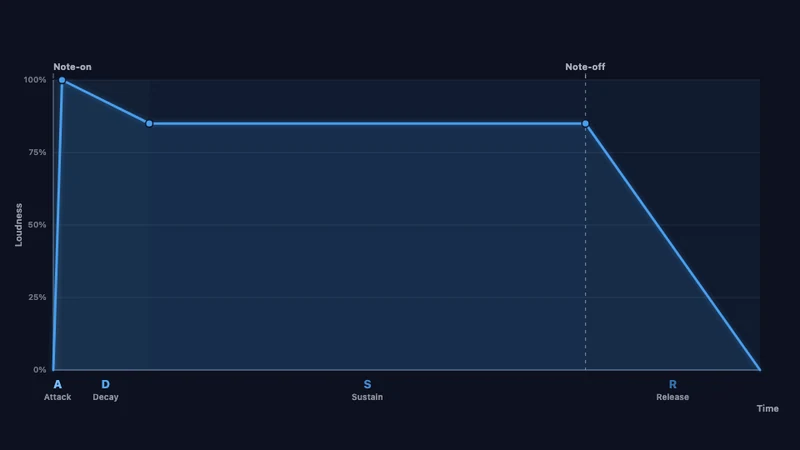
ADSR envelope
Shape and hear the attack, decay, sustain, release of a synth sound; the envelope (time→loudness) drawn. Presets pad vs. pluck.
Music (Gymnasium)Try itVisuApps
Interactive music VisuApps for the curriculum — matching the example course Music Grade 9 (Baden-Württemberg). Many with sound via Web Audio.
Apps
Shape and hear the attack, decay, sustain, release of a synth sound; the envelope (time→loudness) drawn. Presets pad vs. pluck.
Music (Gymnasium)Try it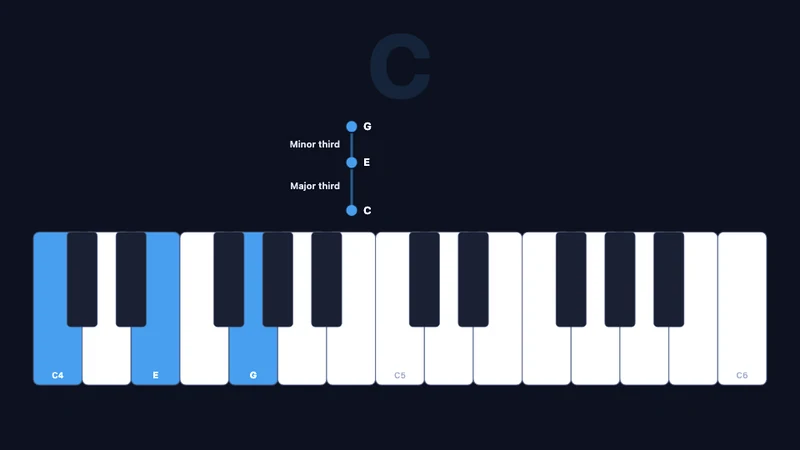
Root + chord type (major/minor/diminished/augmented, seventh chords) + inversion: stacked construction from thirds, chord symbol, audible as an arpeggio/together.
Music (Gymnasium)Try it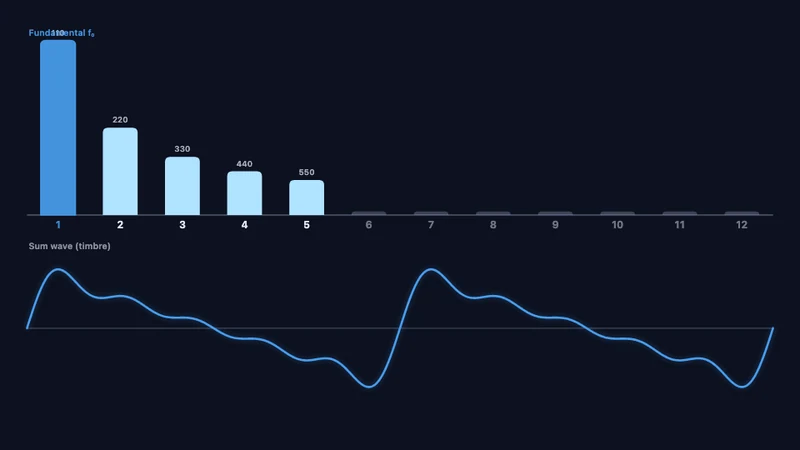
Root → partials f, 2f, 3f … with intervals; individual overtones switchable (additive synthesis). Timbre = mixture of the partials, audible and visible.
Music (Gymnasium)Try it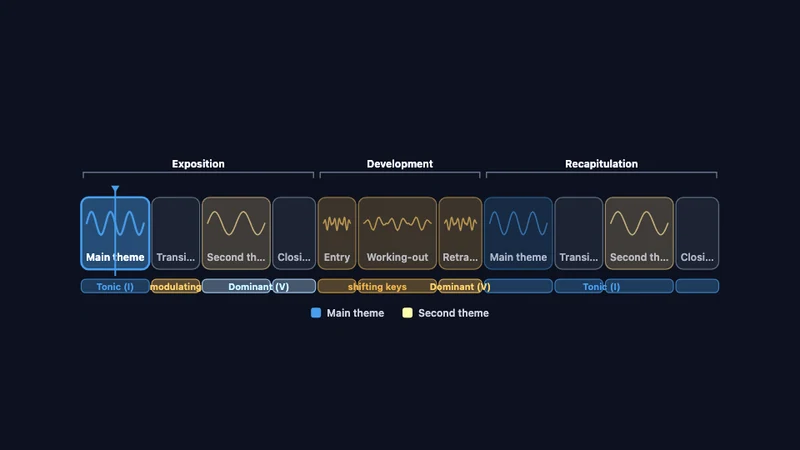
An interactive timeline: exposition (main/secondary theme), development, recapitulation, coda. Clicking a section shows themes and key.
Music (Gymnasium)Try it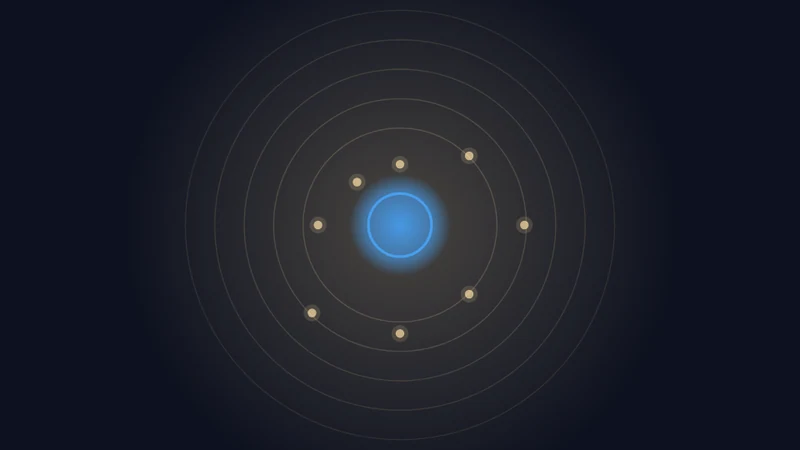
The same leitmotif sounds cheerful, threatening, sad or heroic depending on tempo, major/minor, instrumentation and dynamics — the mood technique in film.
Music (Gymnasium)Try it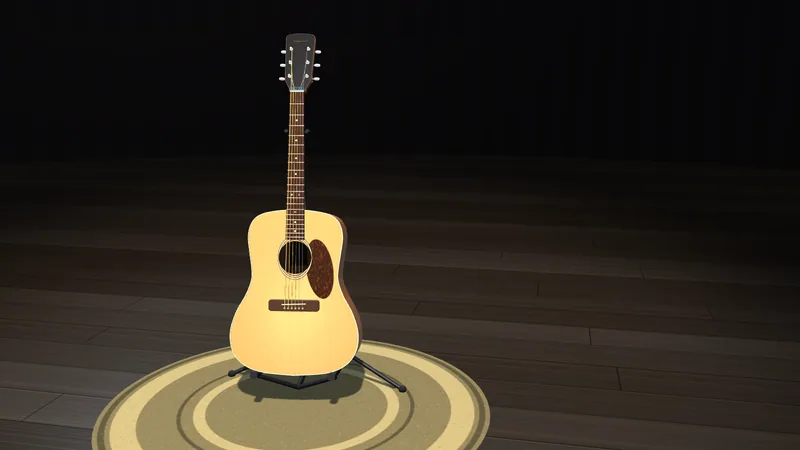
Steel-string, classical and electric guitar at true dimensions on stage: string × fret gives the note, the frets get closer towards the body, fret 12 halves the string. With chord shapes, a note finder, a capo and physically modelled sound.
Music (Gymnasium)Try it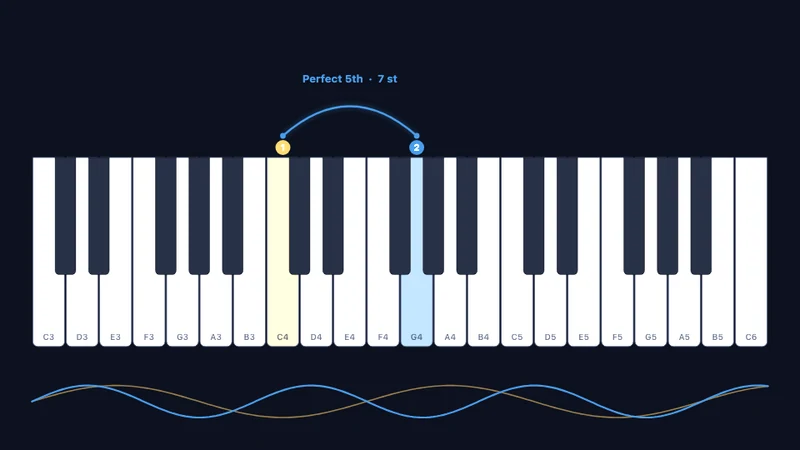
Choose two tones → interval name, semitone steps, frequency ratio (fifth 3:2). Playable melodically/harmonically — consonance vs. dissonance audible.
Music (Gymnasium)Try it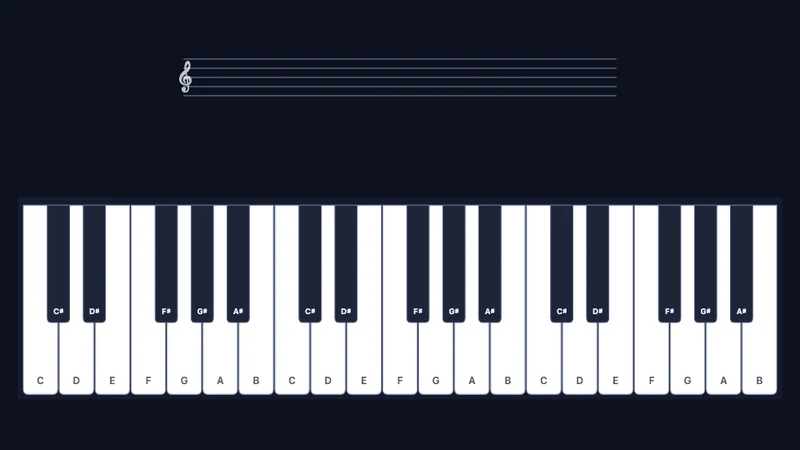
A clickable keyboard over several octaves: note names (C D E F G A B), octave and frequency per key, the tone sounds. Semitones, octave, accidentals.
Music (Gymnasium)Try it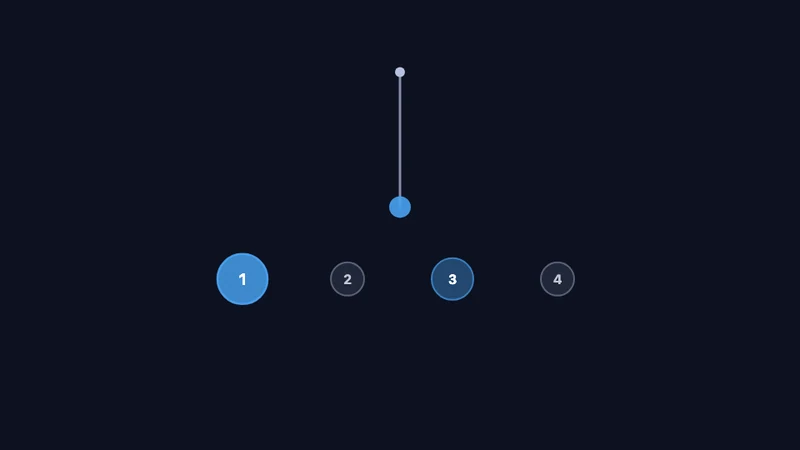
A metronome/pendulum with a pulse graphic: strong vs. weak beats in 2/4 · 3/4 · 4/4 · 6/8. Tempo adjustable, the accented beat highlighted and audible.
Music (Gymnasium)Try it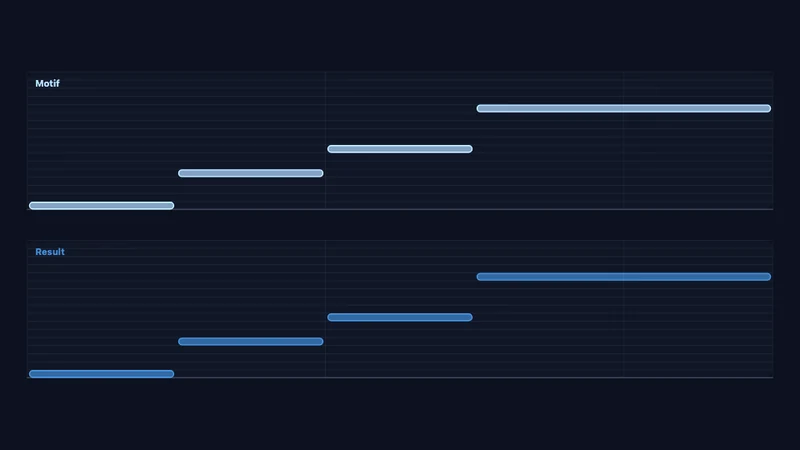
Transform a short motif: repetition, sequence, inversion, retrograde, augmentation/diminution. Original and result visible and audible.
Music (Gymnasium)Try it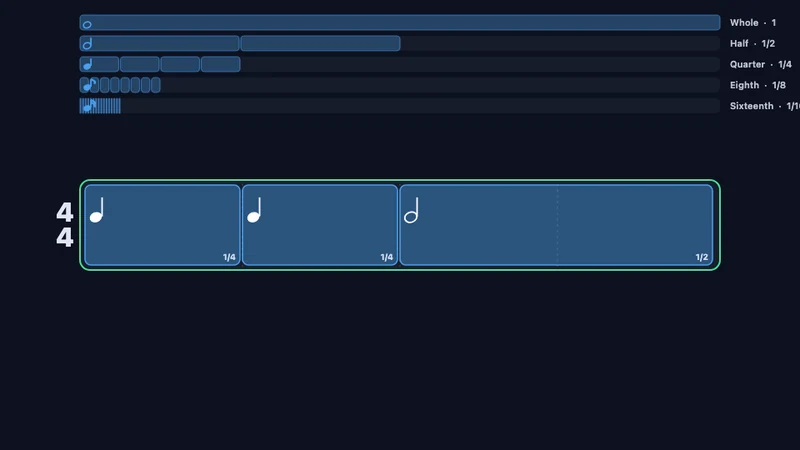
Whole to sixteenth notes (+ dotting) as proportional bars; insert values into a measure and see how they fill it up (4/4, 3/4, 6/8).
Music (Gymnasium)Try it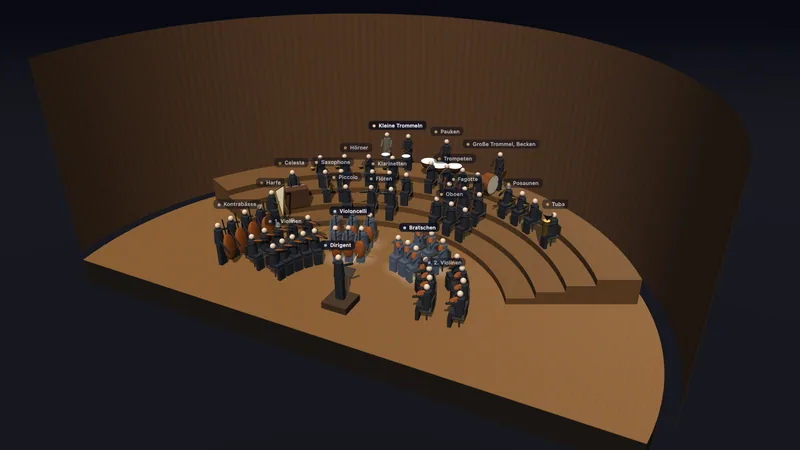
Symphony orchestra on the concert stage with all instrument families, in German and American seating. A timeline following the plan of Ravel's Boléro shows how the crescendo grows from more and more instruments. The same note on different instruments makes the overtone spectrum and the attack visible as the basis of timbre.
Music (Gymnasium)Try it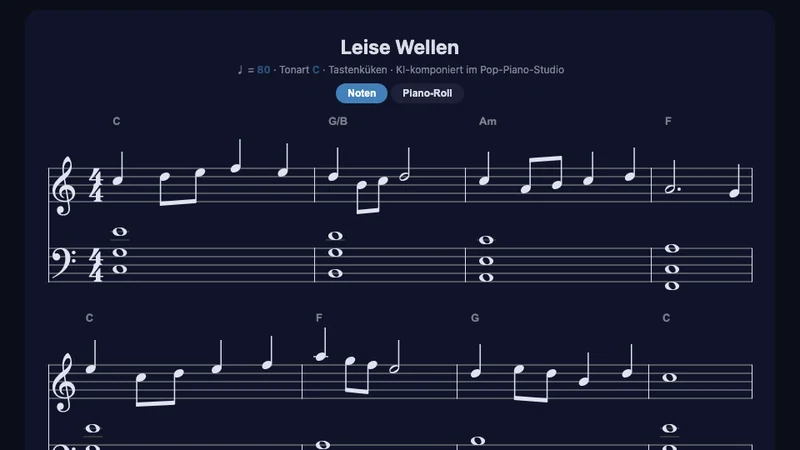
Generate simple pop-inspired piano pieces with professional notation. Play through MIDI or microphone input while recognised notes are highlighted in the score.
Music (Gymnasium)Try it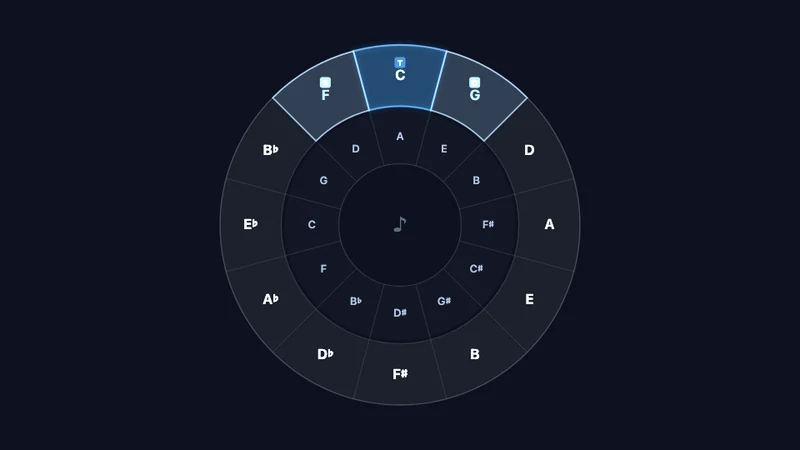
The circle of the 12 major/minor keys at the interval of a fifth: click a key → accidentals, relative key and tonic/subdominant/dominant (T/S/D) highlighted.
Music (Gymnasium)Try it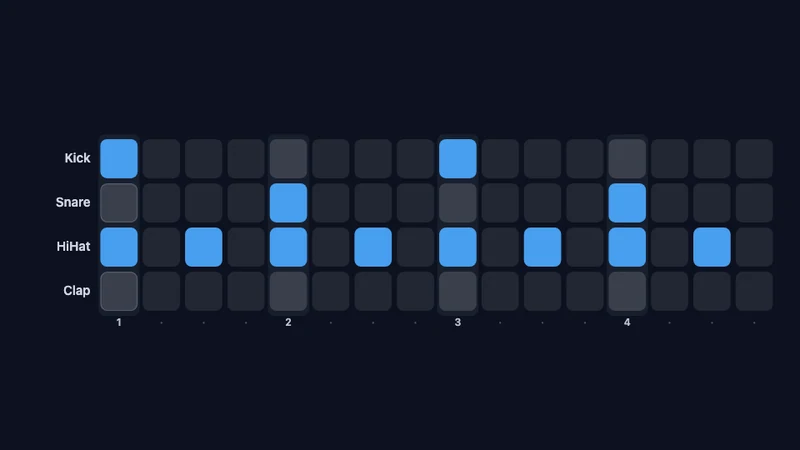
A step grid with kick/snare/hi-hat/clap: place beats, play at tempo, time signature 4/4 · 3/4 · 6/8. Accented beats and a running light show meter & groove.
Music (Gymnasium)Try it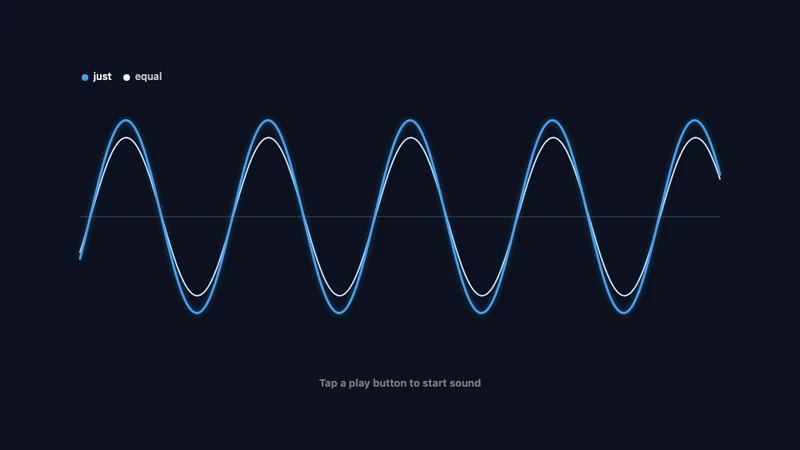
Just intonation (integer ratios, fifth 3:2) vs. equal temperament (2^(1/12)): the deviation in cents visible, the beating of two tones audible.
Music (Gymnasium)Try it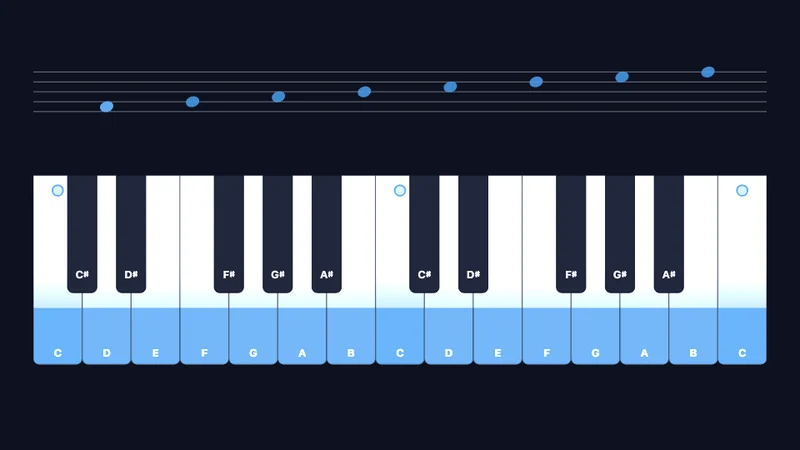
Root + scale (major, minor variants, church modes, pentatonic): construction on the keyboard, whole-tone/semitone step pattern, playable up/down.
Music (Gymnasium)Try it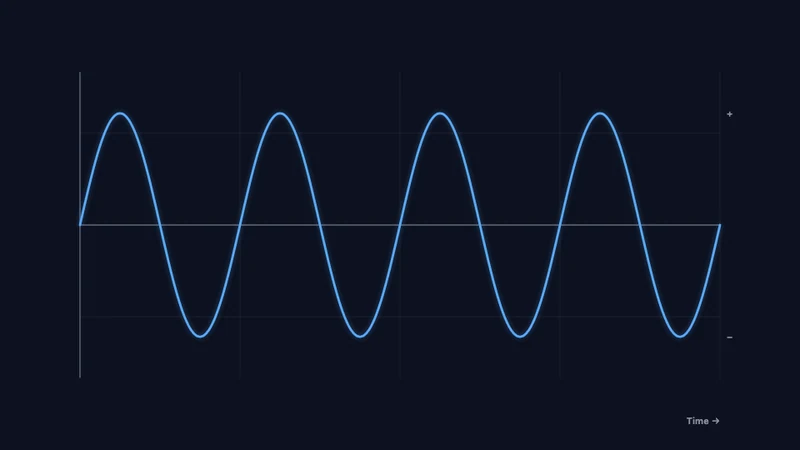
An oscilloscope: adjust and hear frequency (pitch), amplitude (loudness) and waveform (sine/triangle/saw/square → timbre).
Music (Gymnasium)Try itWant to use these apps in your courses? Let’s find out what works for you.
One form, three matters. We answer personally.
We show heyprof on your own material. Tell us what you teach and we will prepare the conversation around it.