Sociology & networks Learn interactively.
Grasp the structures of social networks — Erdős-Rényi, small-world, scale-free
All subjects App catalogue
All apps. Free in your browser.
Cooperation & evolution
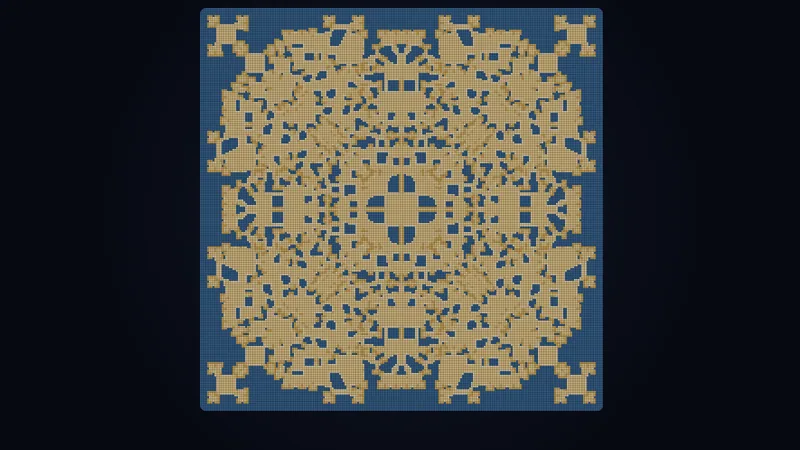
The iterated prisoner's dilemma in three views: an Axelrod tournament with nine strategies and a builder for your own, the evolution of population shares over generations, and a spatial grid after Nowak & May where cooperators and defectors can be painted in. Tit for Tat wins the tournament without winning a single match; on the grid, cooperators hold out in groups.
Sociology & networksTry itSchelling segregation
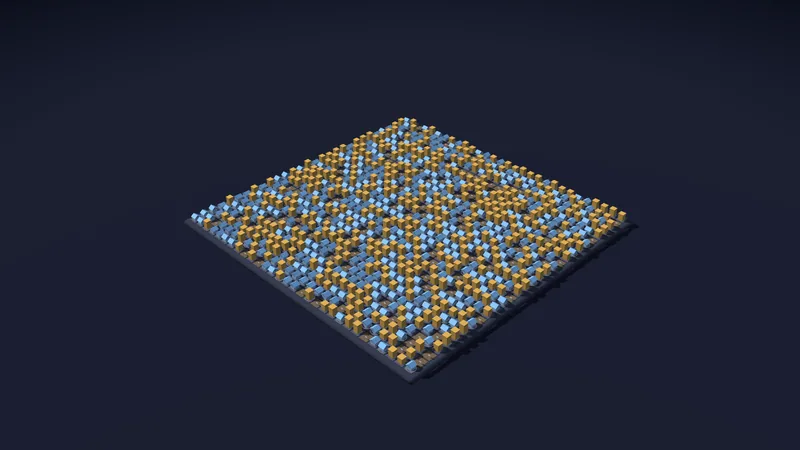
A 3D city of two groups on a grid with vacant lots. Anyone with fewer like neighbours than the tolerance threshold requires moves to the nearest suitable vacant lot. Metrics and a chart show that even at a threshold of one third the share of like neighbours rises from about 50 % to about 70 %.
Sociology & networksTry itSocial deviance
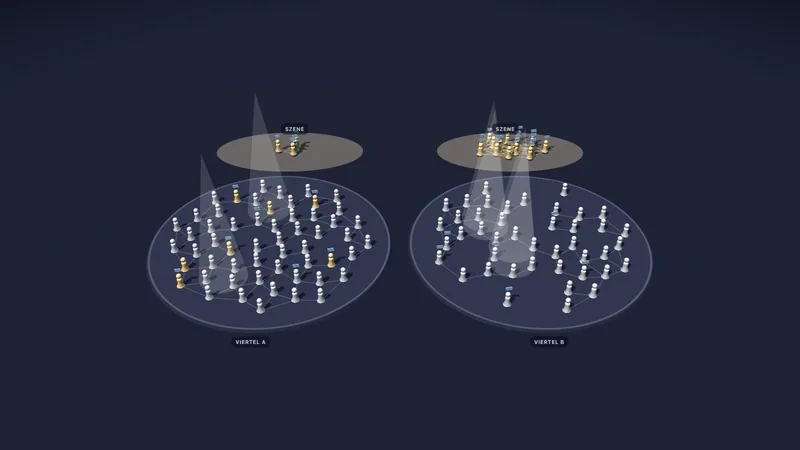
A square with two districts whose 60 residents have exactly the same behavioural leanings. The context (library, office, street party, stadium) shifts the norm, control hands out labels, and Becker’s four types separate pure, secret and falsely accused deviants. If one district is checked more often, it carries more labels, and with feedback (exclusion, self-image, scene) it also comes to deviate more over time.
Sociology & networksTry itSocial network (3D)
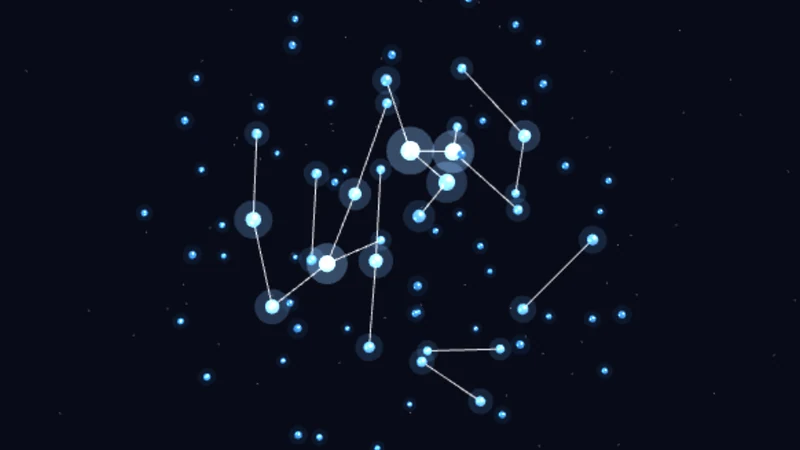
Three classical models (Erdős-Rényi random graph, Watts-Strogatz small-world, Barabási-Albert scale-free) live in a 3D force layout. Clicking a node highlights its neighbours; the statistics panel shows degree, clustering and path lengths live.
Sociology & networksTry it