Checked by computer, not yet reviewed by experts. On 20 November 2026, the mathematician Levent Alpöge presented a proof that he developed with the AI Claude and wrote entirely in the proof language Lean. The code runs without errors and rests only on the 3 standard axioms of Lean. On 21 November the Lean and Mathlib communities confirmed that exactly the Riemann hypothesis is proven and said they believe the proof is correct. Still open as of 22 November 2026: a readable write-up and review by experts.
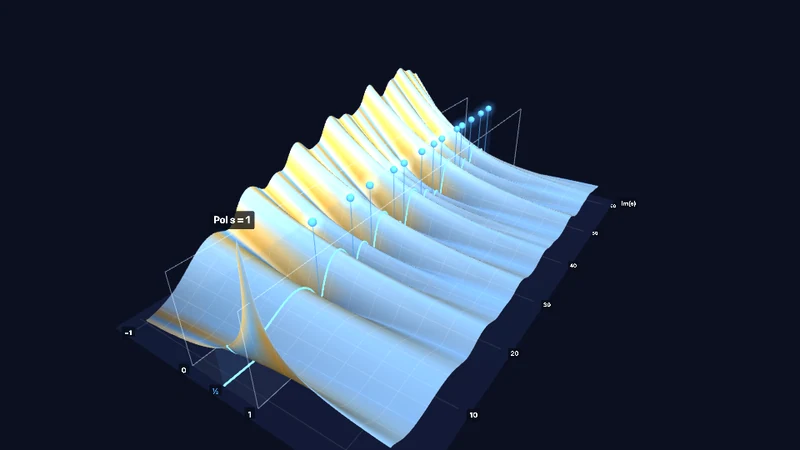
Turn the landscape of the zeta function yourself. In explain mode, an AI tutor demonstrates the app for you.
The news
The newsin four steps.
20 November 2026
The claim
Levent Alpöge, a mathematician at Anthropic, publishes a four-page note and the Lean code on his website. His words: “I believe I have, working with Claude, discovered a proof of the Riemann Hypothesis.” The generalised hypothesis for Dirichlet L-functions is claimed as well.
20 November 2026
First checks
Andrew Sutherland (MIT) compiles the code himself: 175,187 files with about 17 million lines without errors, with only propext, Classical.choice and Quot.sound as axioms. Sutherland calls it “an historic moment”.
20 November 2026
A second draft
On the same day, Ravi Vakil, president of the American Mathematical Society, announces a draft of about 940 pages by Alessandro Masullo on the generalised hypothesis, written entirely without AI. By the next day, readers report gaps.
21 November 2026
Confirmation by the Lean community
The tools comparator and con-leche confirm: what is proven is exactly the Riemann hypothesis as defined in the Mathlib library, with no redefined terms. The Lean and Mathlib communities state jointly, endorsed by the Lean FRO and the Mathlib Initiative, that they have full confidence the proof is correct.
State of the checks
What has been checked,and what is still open.
A proof in Lean only counts as a solution once it is certain that it proves exactly the right statement, and once experts have understood the idea.
Checked
The Lean code compiles without errors (175,187 files, about 17 million lines, Lean 4.33.1 with Mathlib).
Only the 3 standard axioms of Lean, no “sorry”, no hidden assumption.
Independent checking programs accept the proof.
The proven statement is exactly the Riemann hypothesis from Mathlib (comparator, con-leche).
Lean FRO and Mathlib Initiative: “full confidence” in its correctness (21 November).
Open
No readable write-up, only a four-page note.
No refereeing, no publication in a journal.
The Clay Institute still lists the hypothesis as open.
The hypothesis
What the hypothesisactually says.
In 1859, Bernhard Riemann studied a function that now bears his name: the zeta function. For every number s in the complex plane it gives a value. What matters are the places where this value is exactly 0.
The zeta function
For numbers with real part greater than 1 it is the sum 1 + 1/2ˢ + 1/3ˢ + 1/4ˢ + … Euler showed that the same sum is a product over all primes. Beyond that, it is continued uniquely.
The zeros
There are easy zeros at −2, −4, −6 and so on. All the others, the non-trivial ones, lie in a strip between real part 0 and 1. That has been proven since 1896.
The hypothesis
Riemann conjectured: all non-trivial zeros lie exactly in the middle of the strip, on the line with real part ½. The first ones lie at heights 14.13, 21.02 and 25.01.
Primes
Why the primesdepend on it.
Primes become rarer the larger they get, but they follow an average rule, the prime number theorem. How far they stray from that rule is decided by the zeros of the zeta function.
One wave per zero
Riemann’s formula builds the staircase of primes out of waves. Each zero contributes a wave, and with every further one the curve hugs the staircase more closely.
All on the line
If all zeros lie on the critical line, every wave grows only like the square root of x. Then the primes stray as little as possible from their rule.
More than 1000 theorems
Many results in number theory begin with “assume the Riemann hypothesis is true”. A proof would put many of them on solid ground, right up to questions in cryptography.
Lean
Lean:What a machine can check.
Lean is a proof language. Every step is written down so precisely that a small checking program, the kernel, can verify it. The Mathlib library holds the definitions of mathematics, including that of the Riemann hypothesis.
What Lean checks
Whether every step follows from the previous ones, whether only permitted axioms are used, and whether exactly the written statement stands at the end. A calculation error or a skipped gap gets caught.
What Lean does not check
Whether the written statement is the intended one. Anyone who redefines a term along the way may be proving something else. That is why the comparator tool matches the statement against Mathlib, and why experts who understand the proof are needed.
Expedition film
Has the Riemann Hypothesis Been Proven?Loading the film
The expedition film:watch, step in.
A film running on the live app, in three levels for children, newcomers and experts: the zeta function as a landscape, the primes built from waves, the spiral and the state of the checks. You can pause, turn the scene yourself and explore every part with the magnifier.
Frequently askedquestions on the Riemann hypothesis.
Has the Riemann hypothesis been proven?
As of 22 November 2026: fully checked by computer, not yet reviewed by experts. On 20 November 2026, Levent Alpöge presented a proof formalised in Lean. The code compiles without errors, the statement is exactly the hypothesis, and the Lean and Mathlib communities consider the proof correct. A readable write-up and refereeing are still pending.
What does the Riemann hypothesis say?
All non-trivial zeros of the Riemann zeta function lie on the line with real part ½, the so-called critical line. Bernhard Riemann conjectured this in 1859.
What does the hypothesis have to do with primes?
Riemann’s formula builds the distribution of the primes from the zeros of the zeta function, each zero contributing a wave. If all zeros lie on the critical line, the primes stray as little as possible from their average rule.
What role did the AI Claude play?
According to Alpöge’s note, Claude was the main collaborator and clearly outpaced him towards the end. The proof itself exists as Lean code that a computer can check step by step.
What is Lean?
Lean is a proof language. Every step of a proof is written down so precisely that a small checking program, the kernel, can verify it. Lean can check whether the proof fits the statement, not whether the statement is the intended one. That is what matching against the Mathlib library is for.
Isn’t it enough to check lots of zeros?
No. More than 10 trillion zeros have been checked, all on the line. But there are infinitely many, and number theory has inequalities that hold in every computation and still fail eventually.
Will Alpöge get the million dollars?
Not straight away. The Clay Institute requires publication and 2 years of general acceptance in the field. On 21 November 2026 it still listed the hypothesis as open.
Hasn’t the hypothesis been proven many times before?
It has been claimed many times, for example by Louis de Branges in 2004 and Michael Atiyah in 2018. None of those attempts held up. What is new this time is that a machine checks the steps before people have read them.
What is the generalised Riemann hypothesis?
The same statement for related functions, the Dirichlet L-functions. Alpöge claims it as well. A second, human draft by Alessandro Masullo also concerns this hypothesis; gaps have already been reported there.
How can I picture the zeta function?
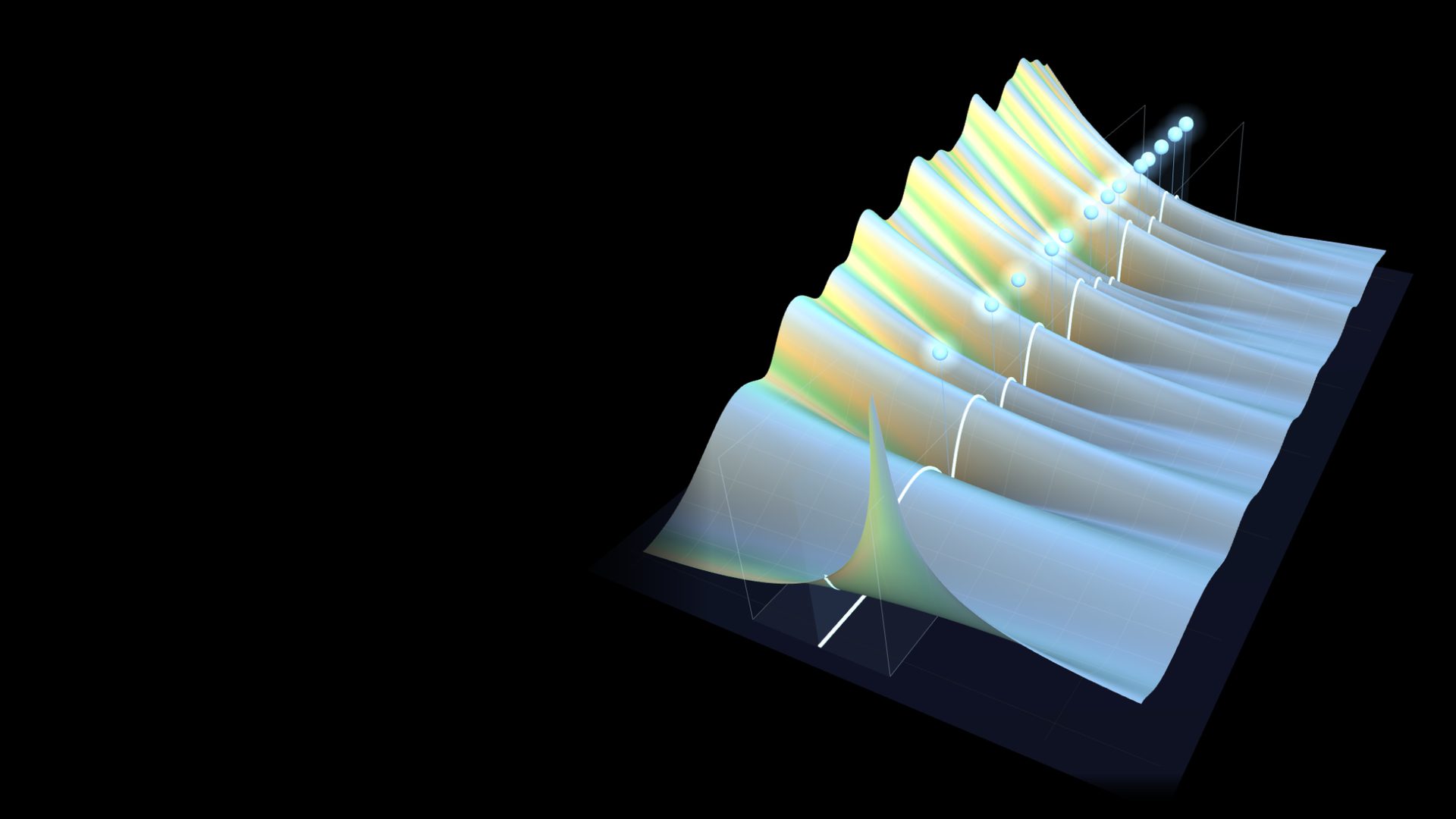
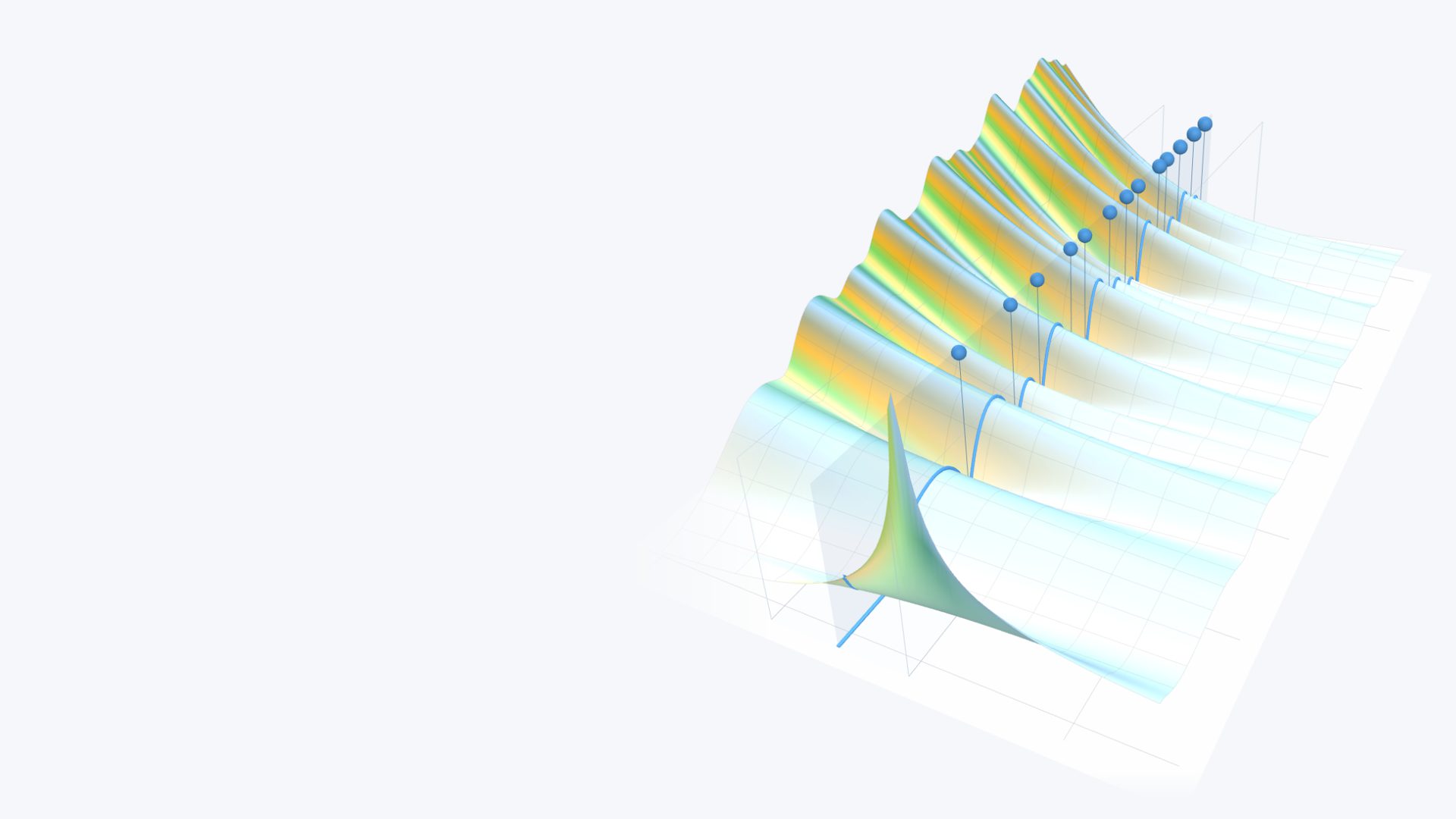
As a landscape over the number plane: the height shows how large the value is, the colour which direction it points. Where the landscape touches the floor, there is a zero. The app on this page shows exactly that in 3D.
This page summarises the state as of 22 November 2026 and will be updated as the situation changes. It is an independent learning service by Studio Quant GmbH and not affiliated with Anthropic or the Clay Mathematics Institute.