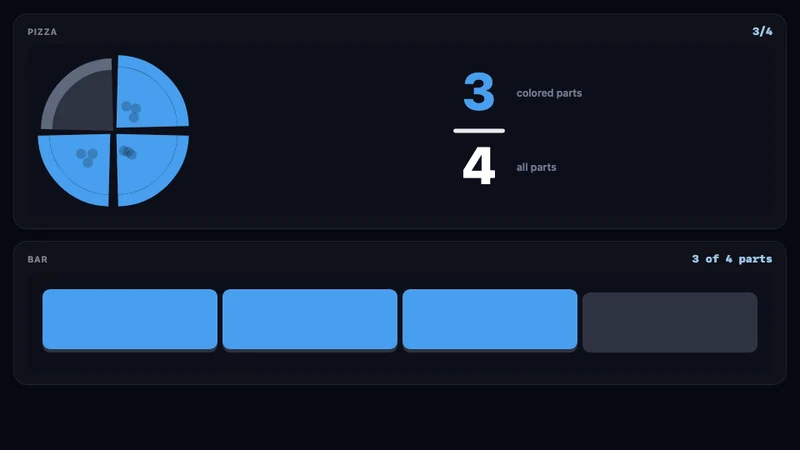
Fraction pizza
Explore fractions as pizza slices and bars. Compare equivalent fractions and see why more equal pieces mean smaller individual pieces.
Elementary · MathsTry itVisuApps
Numbers, arithmetic, shapes and measures for grades 1–4 — hands-on, with and without game modes
Apps
Explore fractions as pizza slices and bars. Compare equivalent fractions and see why more equal pieces mean smaller individual pieces.
Elementary · MathsTry it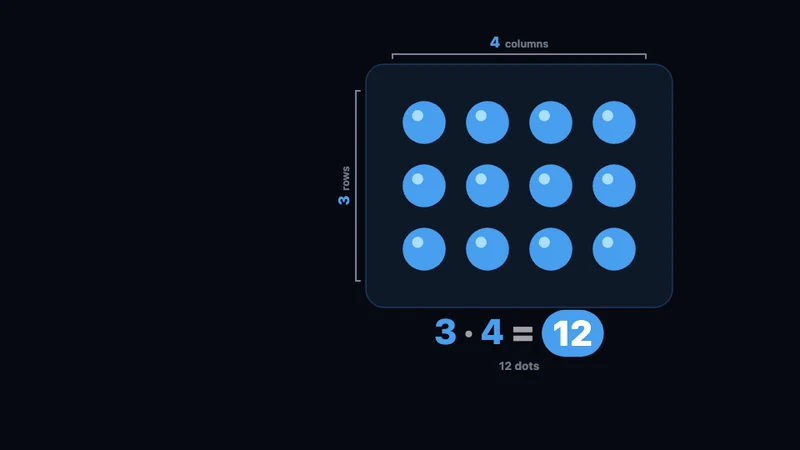
Build multiplication as a rectangular dot array. Rotate the array to reveal commutativity and add rows to connect multiplication with repeated addition.
Elementary · MathsTry it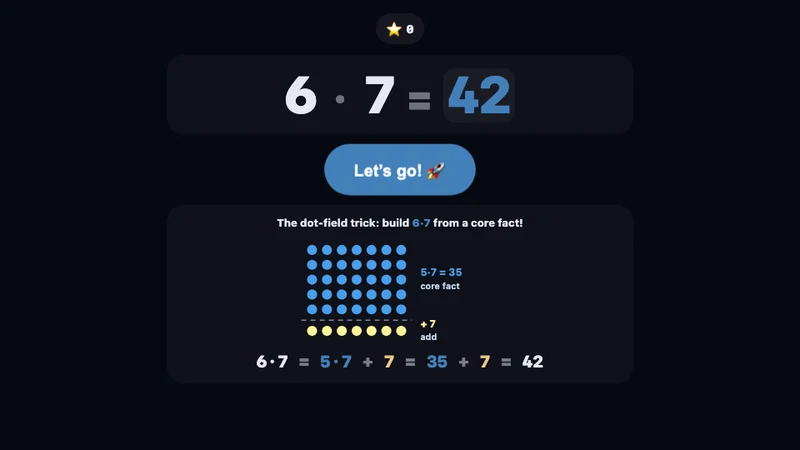
Deliberately gamified times-table training: pick your tables, solve 8 tasks within a time window, stars fly for correct answers, and every table levels up. Slip up and the dot field appears as help — the core-fact strategy 6·7 = 5·7 + 7 becomes visible right on the field. The king round mixes all tables for double stars. Refutes the misconception that times tables are pure memorization without structure.
Elementary · MathsTry it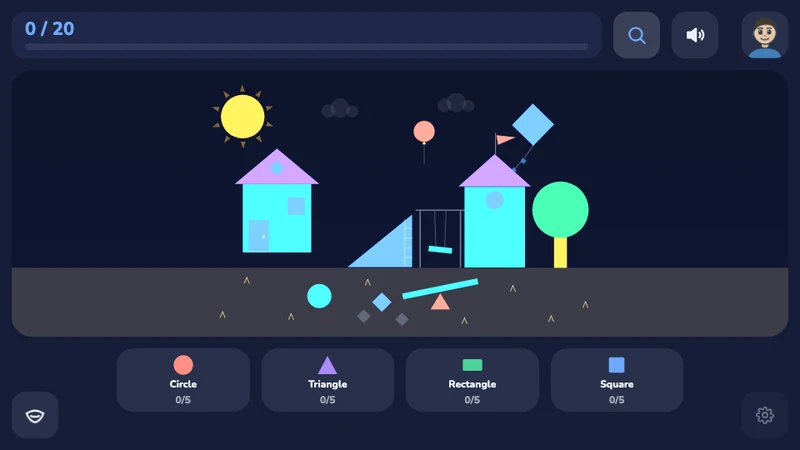
Hidden-object search with a magnifying lens: find circles, triangles, rectangles and squares in a playground scene, count corners and sides and sort them into shape boxes — with a rotation proof against the diamond misconception.
Elementary · MathsTry it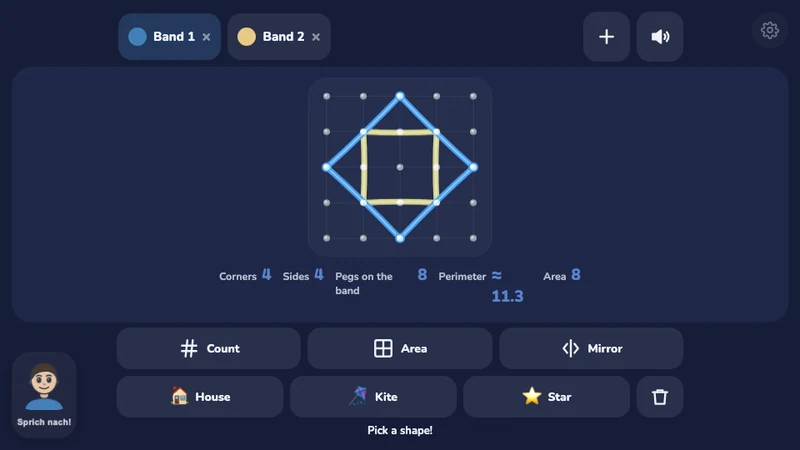
Digital geoboard with 5×5 pegs: stretch elastic rubber bands in different colours and build shapes like a house, kite or star. Analysis tools number corners and sides, tint the area square by square and test symmetry with a mirror band. The number trap refutes the misconception that equally long bands enclose equally large areas: perimeter 10 can mean 4 or 6 squares.
Elementary · MathsTry it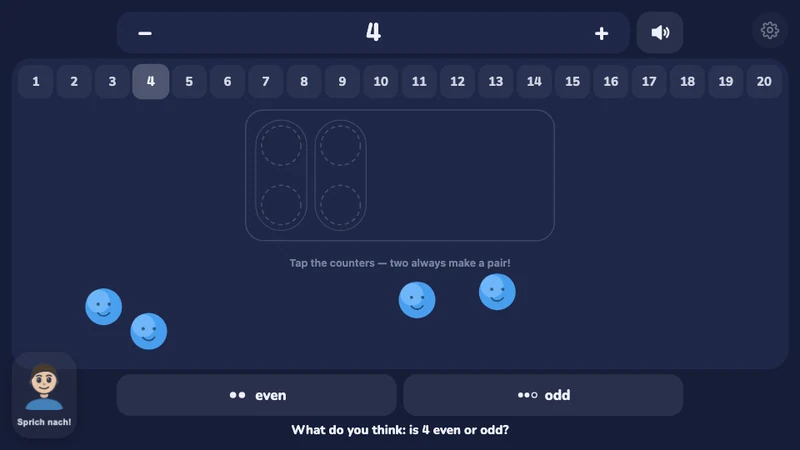
Counters line up in pairs: if one is left alone, the number is odd. The number band shows how even and odd always take turns — and the block of ten shows why only the last digit decides.
Elementary · MathsTry it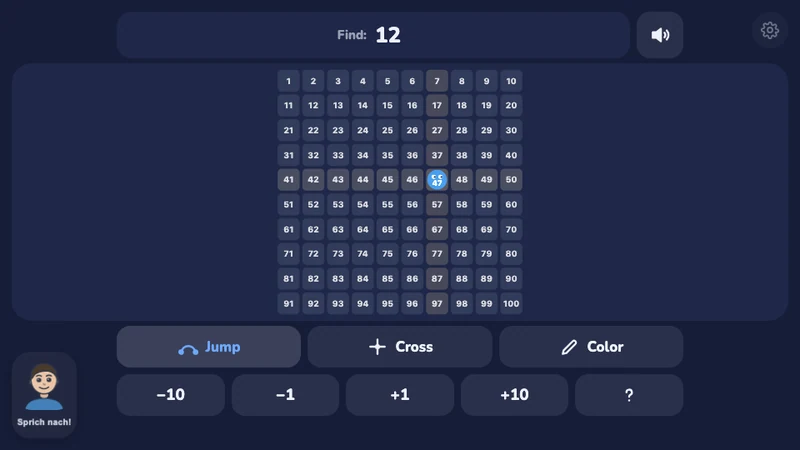
A friendly marker chip hops across the hundred chart: +1 jumps one column right, +10 one row down — the column stays the same. The number cross shows every number's ±1 and ±10 neighbors with arrows, color buttons make the 2s, 5s, 10s and 11s rows light up live as stripes and a diagonal, and children paint their own patterns with free colors. This reveals that the chart is not just a list of numbers: position encodes place value — row = tens, column = ones.
Elementary · MathsTry it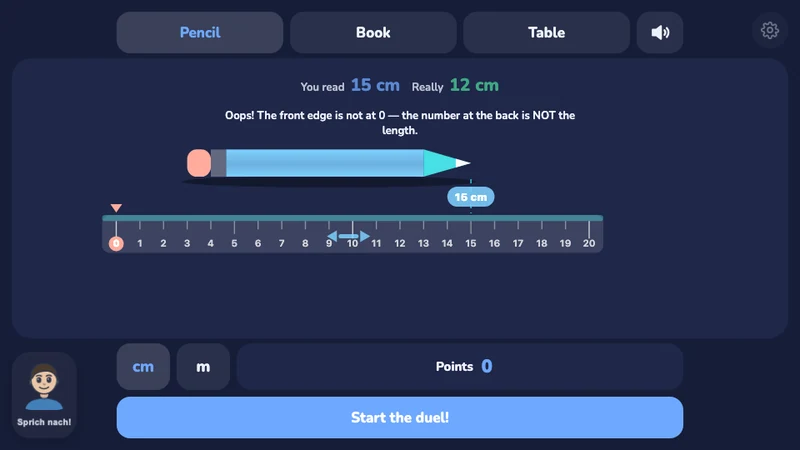
A draggable ruler is placed against a pencil, book or table — and the app shows live what you read off versus how long the object really is. The classic mistake becomes directly tangible: the number at the back edge is only correct if the 0 sits at the front; otherwise the number trick back − front saves the day. The cm/m toggle turns unit conversion into a visible zoom change, and the estimation duel awards points for close guesses — estimate first, then measure.
Elementary · MathsTry it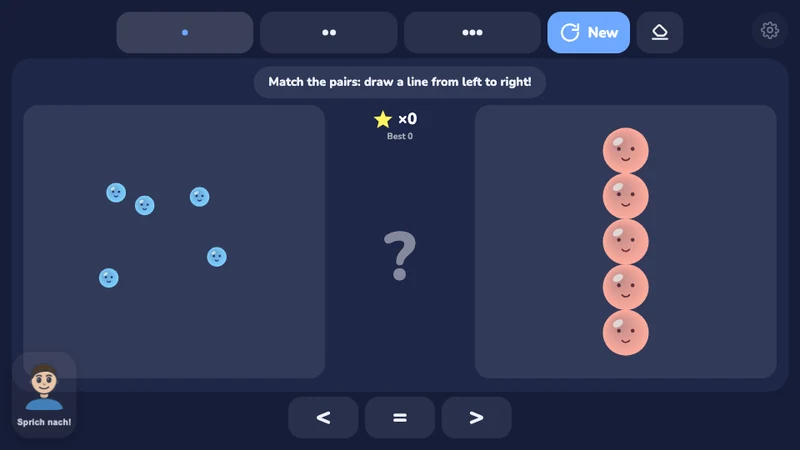
Compare two groups like a pro: match pairs, see what is left over — and the hungry crocodile always eats the bigger group. With streak scoring and eye-trick tasks.
Elementary · MathsTry it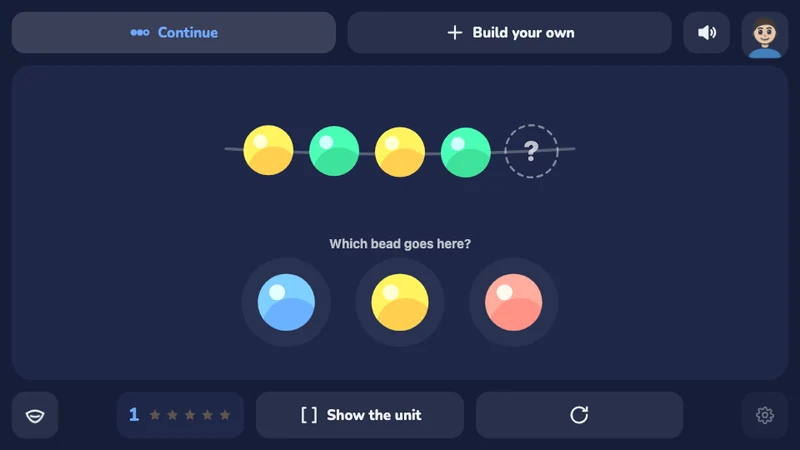
Spot and continue bead-chain patterns: the repeating unit becomes visible as a bracket, wrong beads are marked with a reason — plus a build-your-own-pattern mode.
Elementary · MathsTry it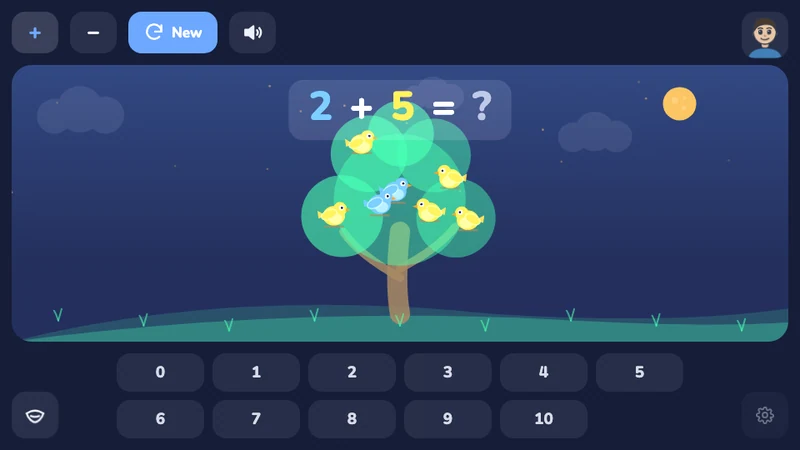
Birds fly to the tree (+) or away (−) — the number sentence builds in sync with the action, and a balance scale shows that "=" means: both sides the same amount.
Elementary · MathsTry it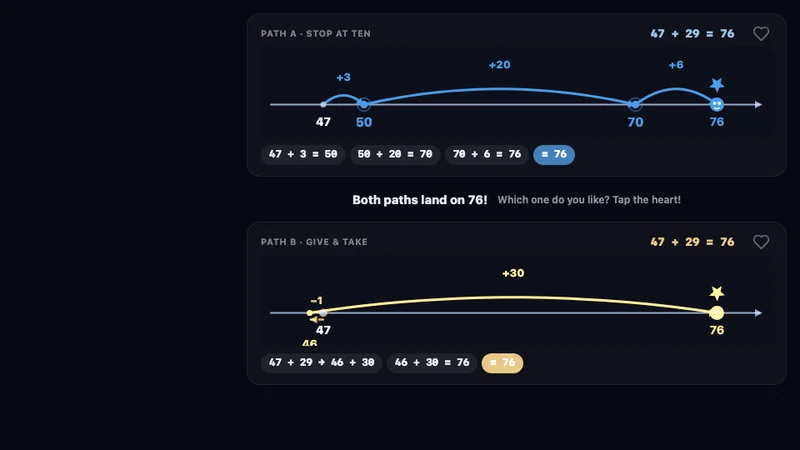
Two empty number lines stacked on top of each other show the same addition task as animated jump arcs — path A and path B using different mental math tricks: stop at ten (34+6=40, then +2), tens + ones, helper task (+30, then −1) and give & take (47+29 becomes 46+30). Pick a task or build one with sliders, swap tricks and watch the equation build step by step below each line. Debunks the misconception that there is only ONE right way to calculate: all jump sequences land on the same number, and the child marks a favorite path with the heart.
Elementary · MathsTry it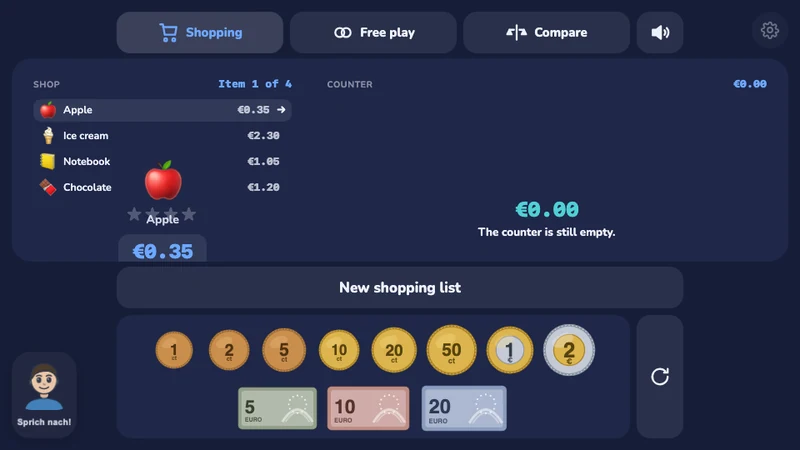
A play shop with a real purse: prices are laid exactly with SVG coins and notes from 1 cent to 20 €, and a shopping list with stars guides the game. Change is worked out by adding on — the hops from €3.20 up to €5 become visible on a jump line. In free-play mode the child collects different ways of laying the same amount, and the compare duel of 5 × 1 cent versus 1 × 1 € refutes the misconception that many coins automatically mean much money. Decimal notation is read along gently: €3.20 = 3 euros and 20 cents.
Elementary · MathsTry it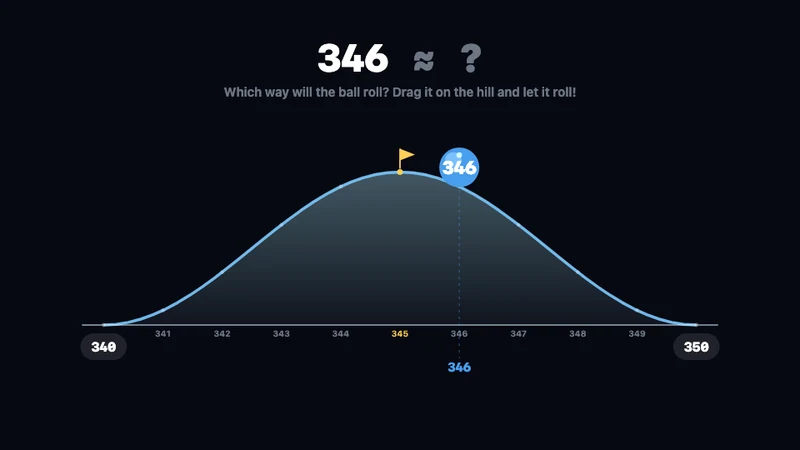
A ball carrying the number sits on a hill between two rounding stations and visibly rolls to the nearer side — the 5 sits exactly on the peak and tips towards the bigger number. The rounding place is selectable (tens/hundreds/thousands); the original stays put as a little flag, because rounding does not really change the number. In estimate mode you first calculate with rounded numbers in your head and only then check the exact result. The Estimation Master game awards points for fast, close estimates against the clock.
Elementary · MathsTry it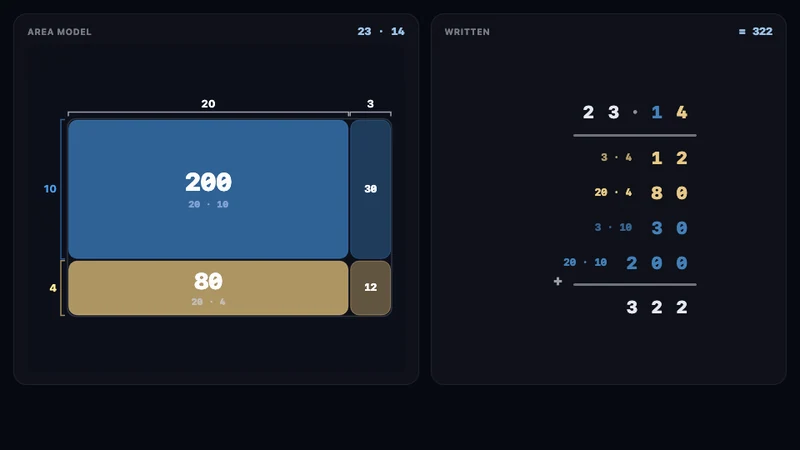
Area model and written algorithm side by side: 23 · 14 is drawn as a true, proportional rectangle that splits at the tens into four colored partial areas — and exactly these partial products reappear as rows in the written method on the right. Tap a field and the matching row lights up (and vice versa). The app refutes the misconception that indenting the second row is a rule without a reason: it reveals the hidden 0, because that row multiplies by tens. In step mode the child types every row on the number pad.
Elementary · MathsTry it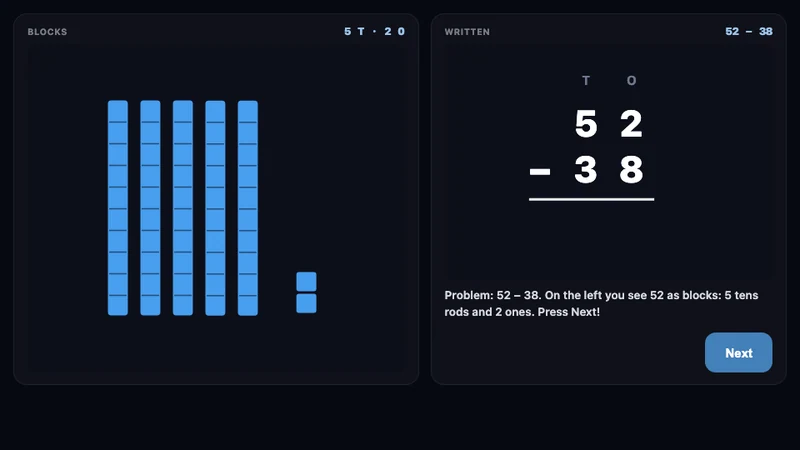
Base-ten blocks and the written scheme side by side, always in sync: for 52 − 38 a tens rod visibly breaks into 10 ones, and only then can you really take away. The trap mode provokes THE classic misconception — just subtracting the smaller digit from the bigger one (8 − 2 = 6, so 26) — and refutes it with the blocks: really taking away yields 14, not 26. Take-away (regrouping) and adding-up are switchable methods, and in step mode the child taps the result digits itself.
Elementary · MathsTry it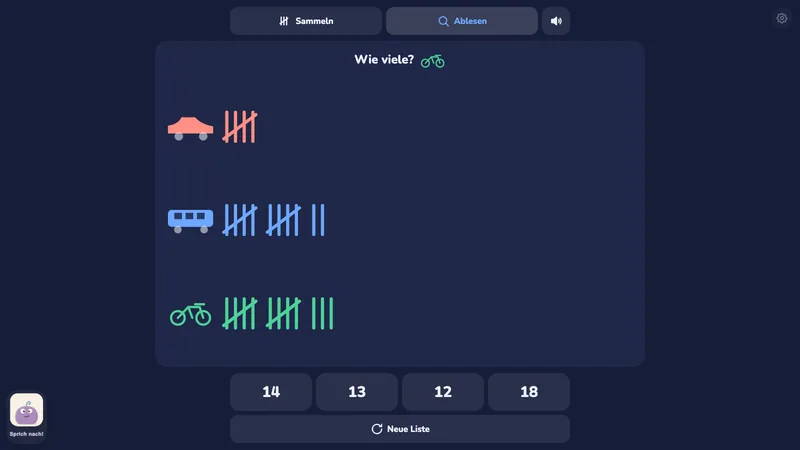
Count passing vehicles with tally marks, watch every fifth mark bundle the group, and answer questions about your own collected data.
Elementary · MathsTry it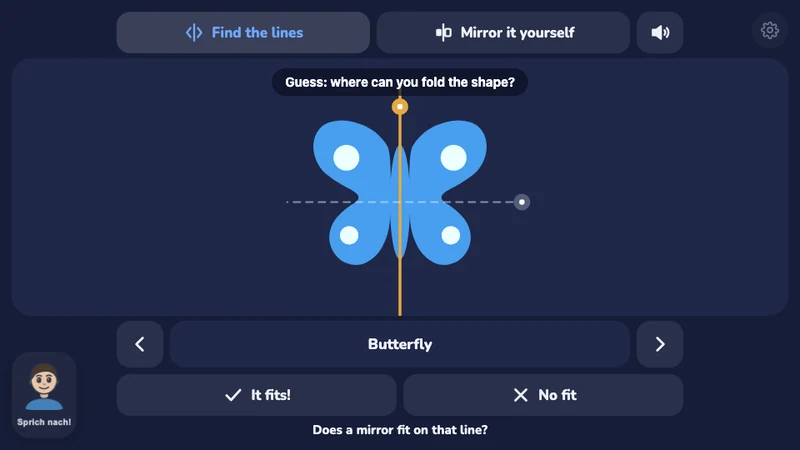
Fold shapes along possible symmetry axes and compare matching halves. Draw on one side and watch equal-distance reflections appear on the other.
Elementary · MathsTry it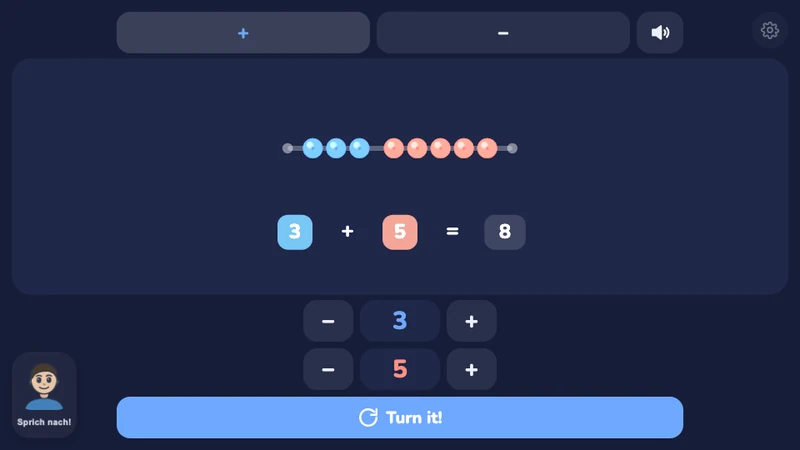
Counters on a rod: turn it 180° — 3 + 5 becomes 5 + 3, and the result stays the same. With minus, swapping goes wrong!
Elementary · MathsTry it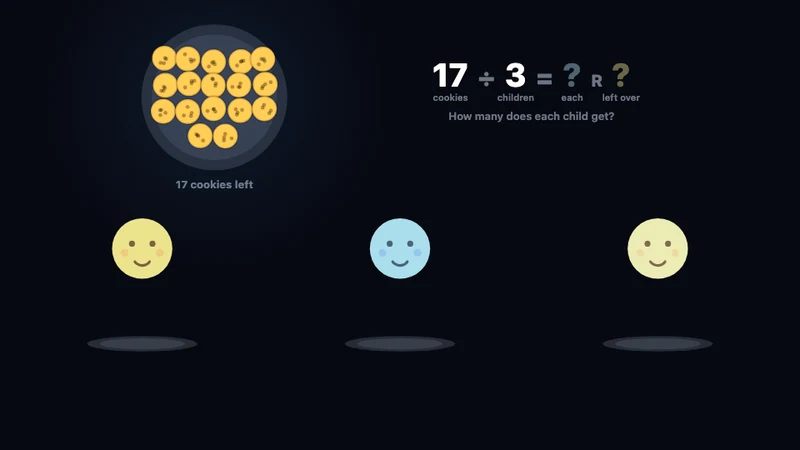
Share cookies fairly: 17 ÷ 3 = 5 R 2 — the cookies fly around onto the children's plates, and whatever is left over stays visibly on the supply plate. Two modes show the two faces of division: sharing out (among 3 children — how many per child?) and grouping (3 each — how many children can be served?). In the game you bet on the remainder before each delivery order and collect stars. Refutes the misconception that the remainder disappears or belongs in the answer as “5.2” — it is its own number and always smaller than the divisor.
Elementary · MathsTry it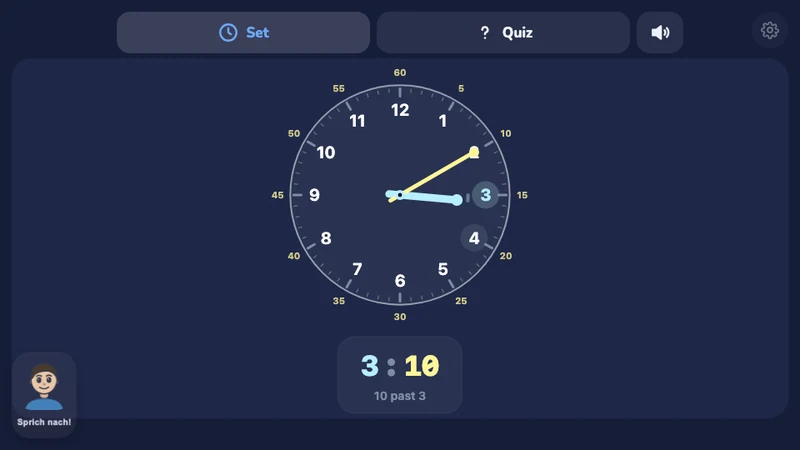
Drag analogue hands and follow the digital display. Practise written times, proportional hour-hand movement and twelve- or twenty-four-hour formats.
Elementary · MathsTry it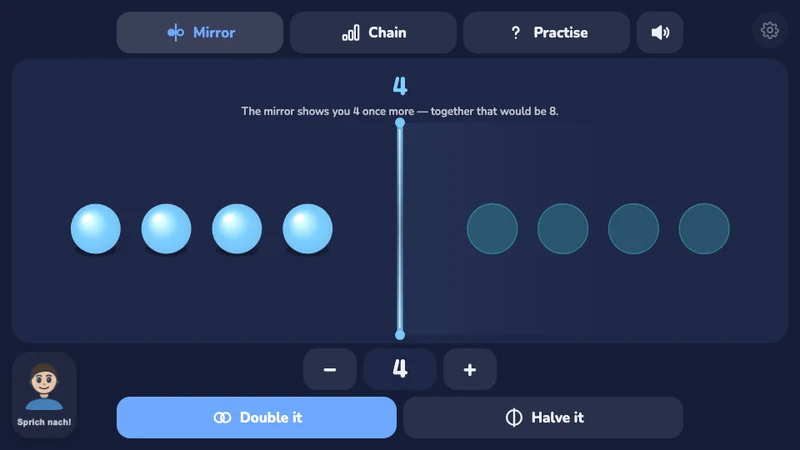
A folding mirror makes doubling visible: real counters on the left, their mirror image on the right — one tap and the image folds over and becomes real: 4 + 4 = 8. Halving is the way back: the set splits into two equal halves and one half returns into the mirror. Chain mode grows a bar tower (3 → 6 → 12 → 24 → 48) showing how fast doubling explodes. Refutes the misconception that odd numbers cannot be halved: 9 splits into 4 + 4 — and the leftover counter stays visibly lying in the middle.
Elementary · MathsTry it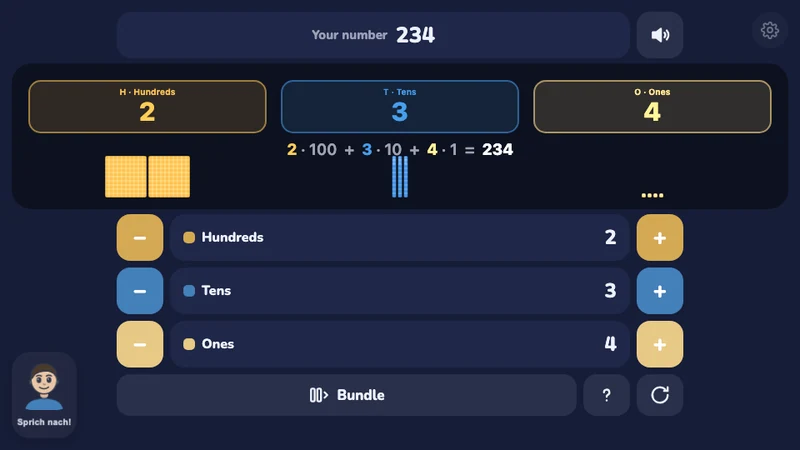
Explore units, tens and hundreds with base-ten blocks. Watch ten units combine into a rod while the place-value equation preserves the total.
Elementary · MathsTry it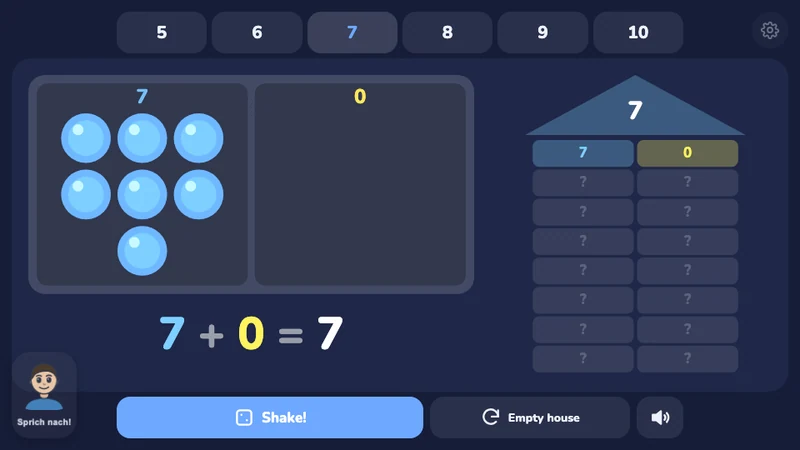
Shake box meets number house: 5–10 counters tumble randomly into two trays with every shake, and each new split fills a floor in the number house. Counters can also be dragged or tapped across to hunt down missing floors — a full house earns a star. The big number sentence a + b = n shows with every throw: the parts change, the whole stays the same. This refutes the misconception that a number is just a counting word rather than a decomposable quantity.
Elementary · MathsTry it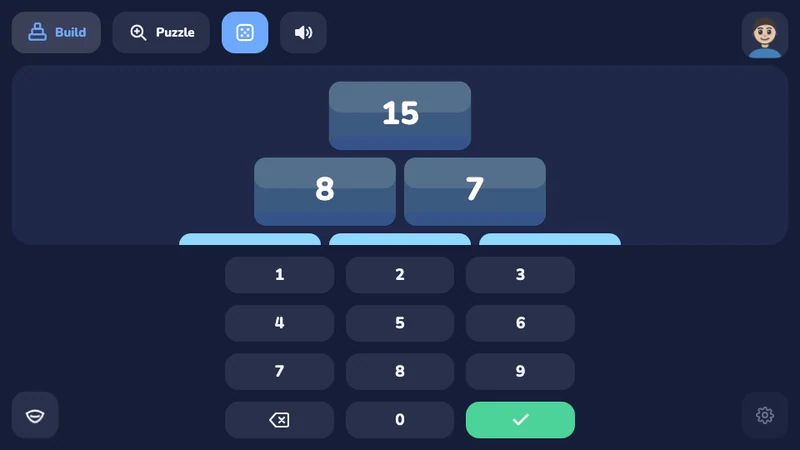
A number wall you can touch: every brick is the sum of the two below it. In build mode the child types numbers into the bottom row and watches the wall fill upwards with animations; dragging two base bricks onto each other swaps them — and the top brick reveals that the middle brick counts twice. Six puzzle levels with fewer and fewer given bricks refute the misconception that walls can only be solved bottom-up: using minus, gaps can be deduced backwards from the top brick.
Elementary · MathsTry it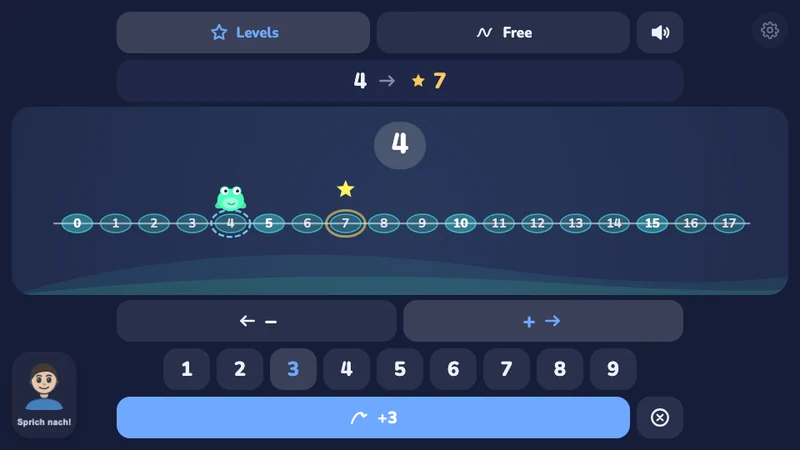
A frog hops along the number line from 0 to 20: +3 means three hops forward from the start stone — you count the arcs, not the stones. The hop arcs stay visible as a trail while the equation builds in sync at the top (4 + 3 = 7). An error demo shows the classic off-by-one counting trap (counting the start stone) right next to the correct way. In level mode children guide the frog to the star target stone using plus and minus jumps.
Elementary · MathsTry itWant to use these apps in your courses? Let’s find out what works for you.
One form, three matters. We answer personally.
We show heyprof on your own material. Tell us what you teach and we will prepare the conversation around it.