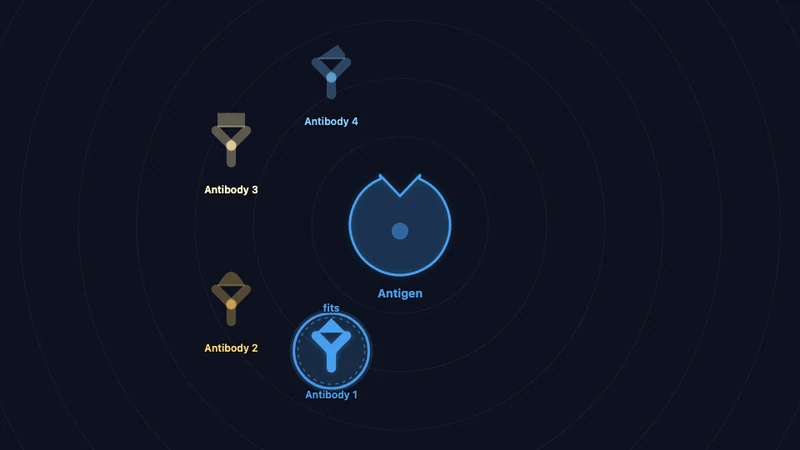
Antigen & antibody
The lock-and-key principle: only the shape-complementary antibody binds to the antigen (specificity of defense). A different antigen → a different matching antibody.
Biology (Gymnasium)Try itVisuApps
Interactive biology VisuApps for the curriculum — matching the example course Biology Grade 9/10 (Baden-Württemberg): evolution, genetics, cell biology, immunobiology.
Apps
The lock-and-key principle: only the shape-complementary antibody binds to the antigen (specificity of defense). A different antigen → a different matching antibody.
Biology (Gymnasium)Try it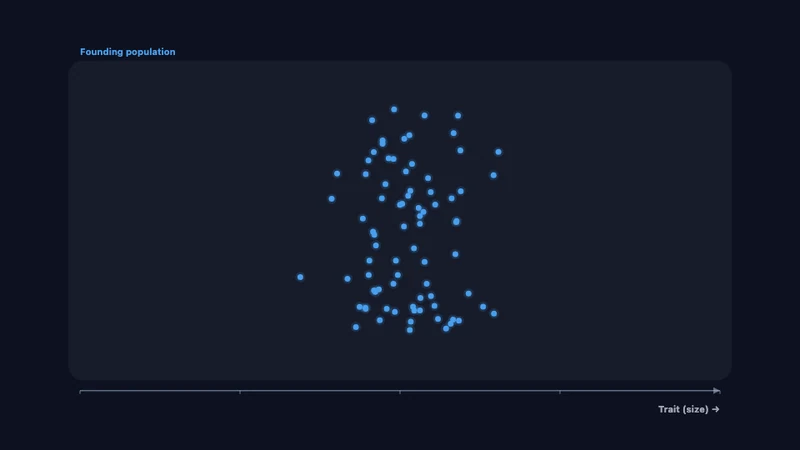
A geographic barrier splits a population; over generations the groups drift apart until they can no longer interbreed (allopatric speciation).
Biology (Gymnasium)Try it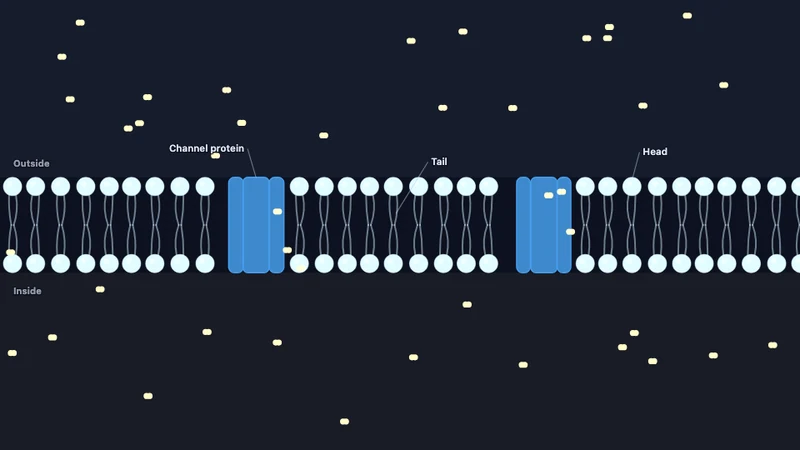
Explore the fluid-mosaic bilayer and selective permeability: small lipid-soluble molecules pass freely, ions require open channels and larger molecules are blocked.
Biology (Gymnasium)Try it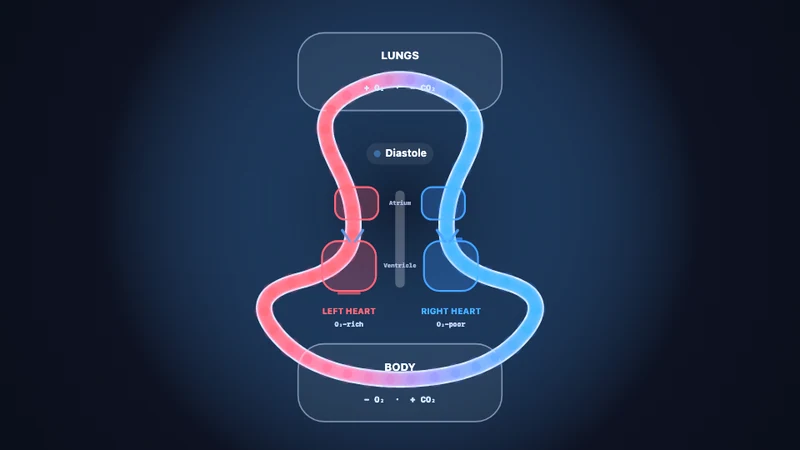
Follow pulmonary and systemic circulation, oxygenation and the four-chambered heart. Explore valves, systole and diastole in a directed double loop.
Biology (Gymnasium)Try it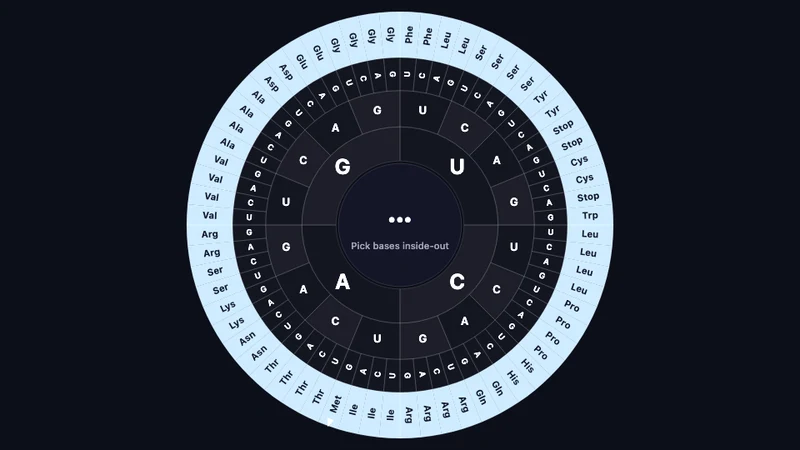
Read mRNA codons from the centre outwards to find amino acids, or select an amino acid and highlight all of its coding triplets.
Biology (Gymnasium)Try it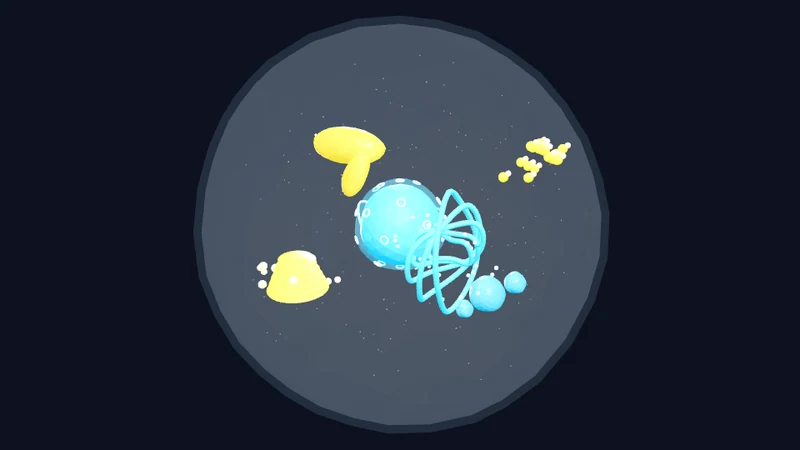
A rotatable animal/plant cell; clicking an organelle shows its function. An animated secretory pathway ER → Golgi → vesicle → membrane.
Biology (Gymnasium)Try it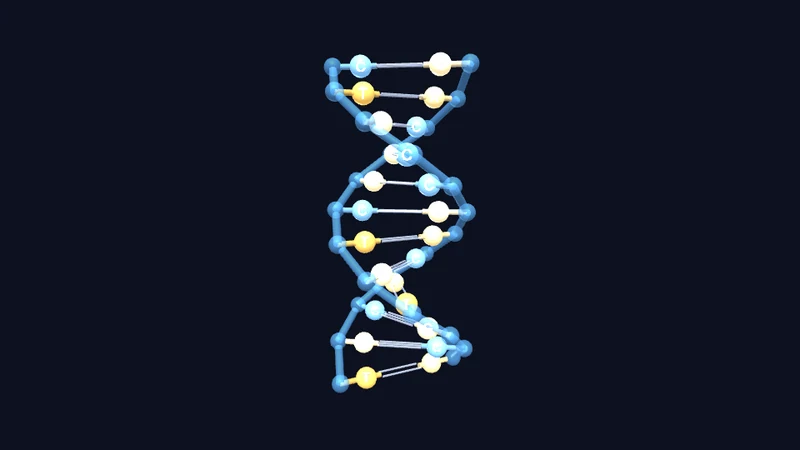
Zoom from the chromosome via the nucleosome to the double helix and a single nucleotide, with a true scale bar. Tap base pairs, unwind and open the helix, show grooves and dimensions, and watch the antiparallel complementary strand form for a sequence you type.
Biology (Gymnasium)Try it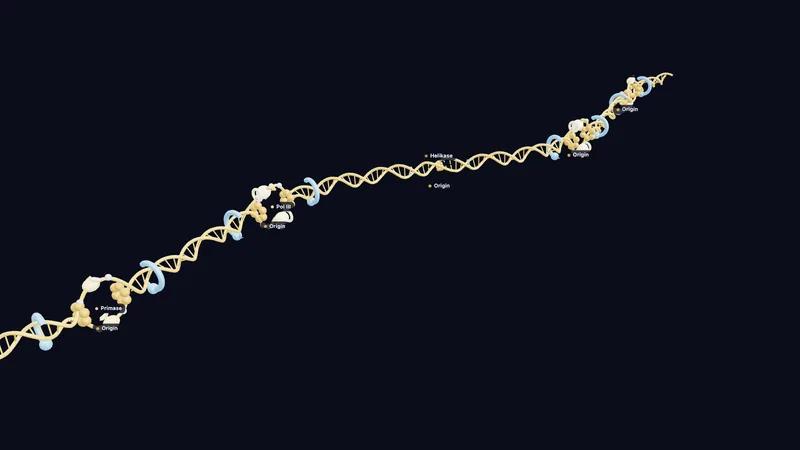
One DNA becomes two: replication bubbles open at many origins and merge while an enzyme team builds the new strands at every fork. Old strands stay visible in colour, and the Meselson-Stahl comparison shows why replication is semiconservative.
Biology (Gymnasium)Try it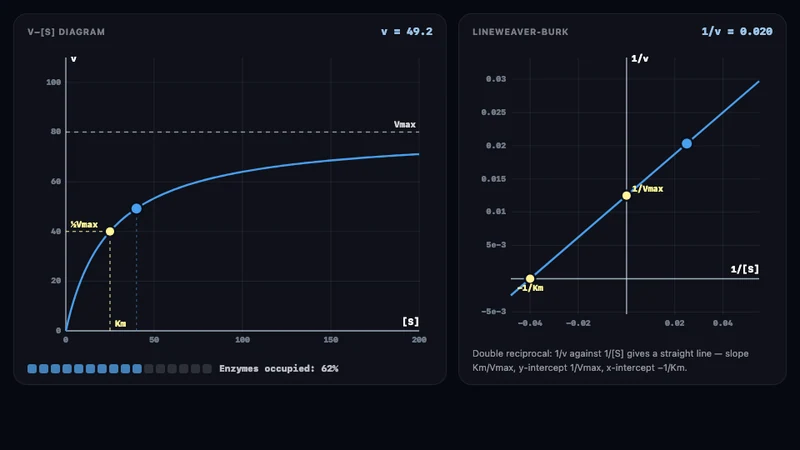
Explore substrate saturation, Vmax and Km, with a Lineweaver–Burk plot. Compare competitive and noncompetitive inhibition.
Biology (Gymnasium)Try it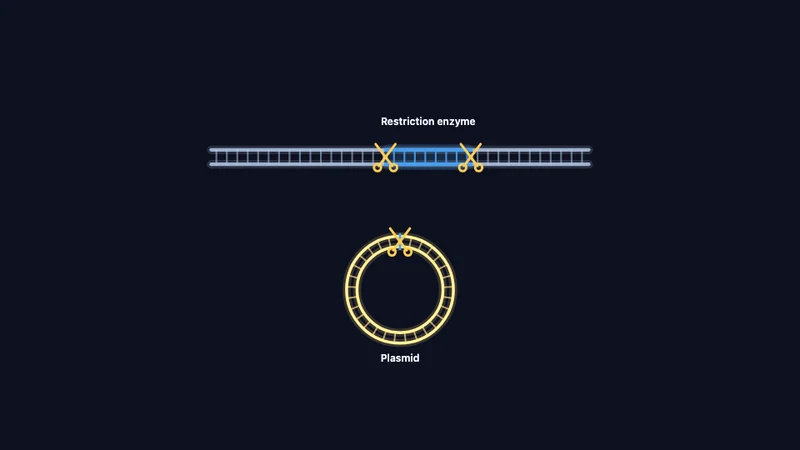
Cut a target gene and plasmid with restriction enzymes, join them with ligase, and explore bacterial replication and protein production.
Biology (Gymnasium)Try it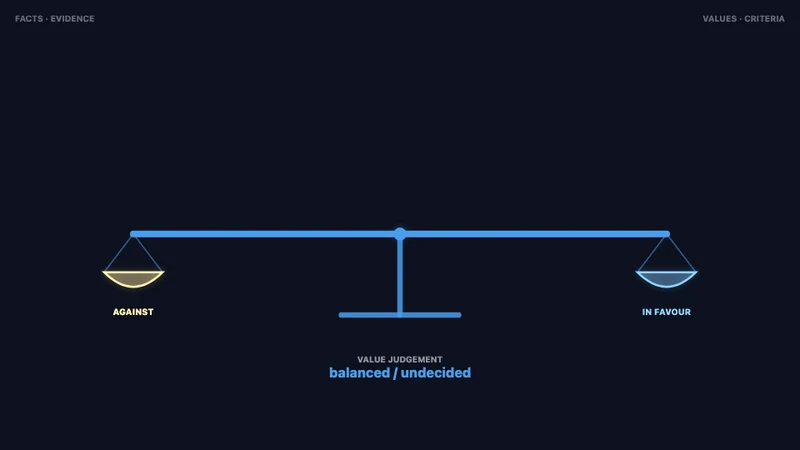
Facts and values kept separate: facts (pro/con) on a GM scenario vs. weighted criteria (health, environment …). No judgment follows from facts alone — evaluation competence.
Biology (Gymnasium)Try it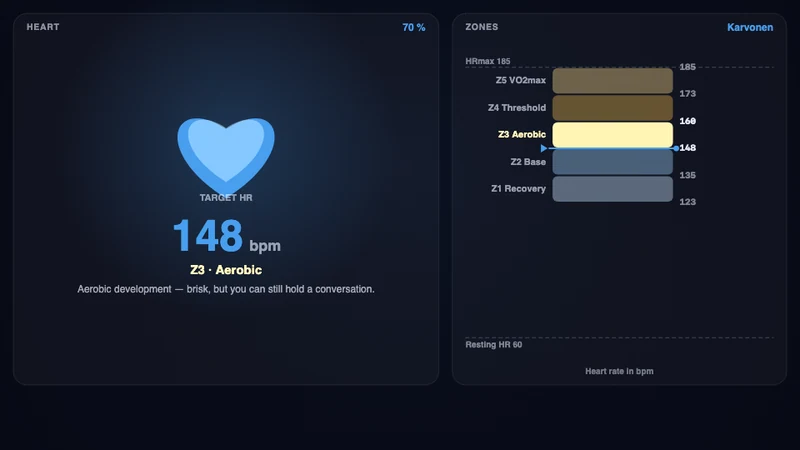
Compare Karvonen heart-rate-reserve zones with percentages of maximum heart rate. Adjust age and resting pulse and observe the resulting target zones.
Biology (Gymnasium)Try it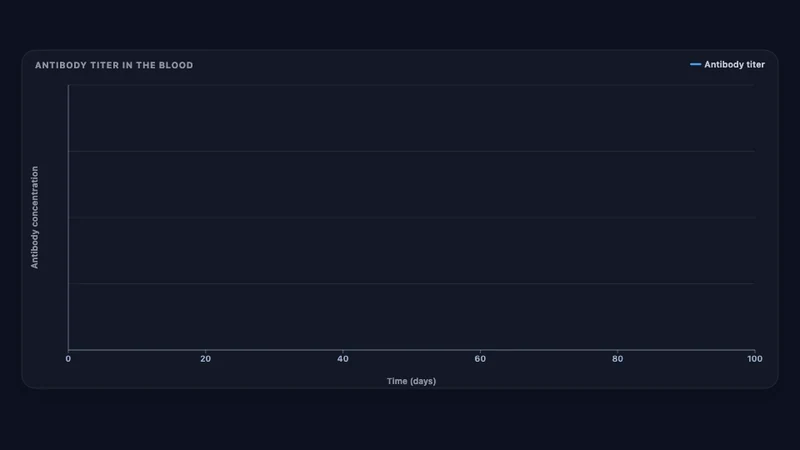
Compare antibody levels during primary and secondary responses to the same pathogen. Explore the faster, stronger response underlying vaccination.
Biology (Gymnasium)Try it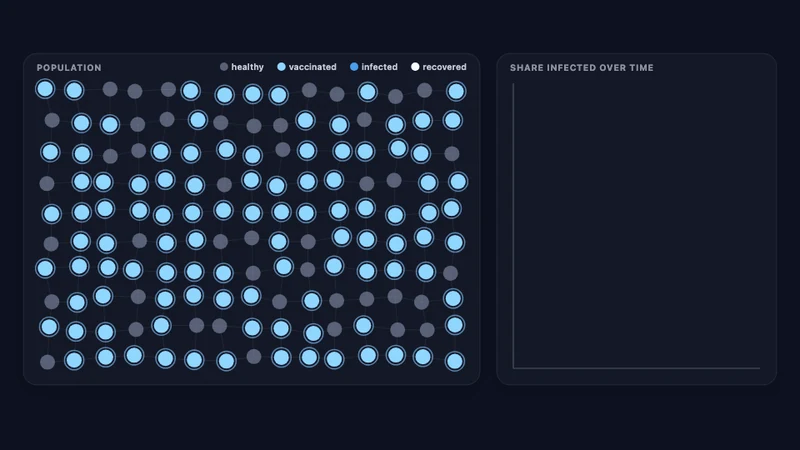
A population grid with a vaccination-rate slider: an outbreak spreads, the vaccinated block the chains. Above a threshold vaccination rate the epidemic dies out (herd immunity).
Biology (Gymnasium)Try it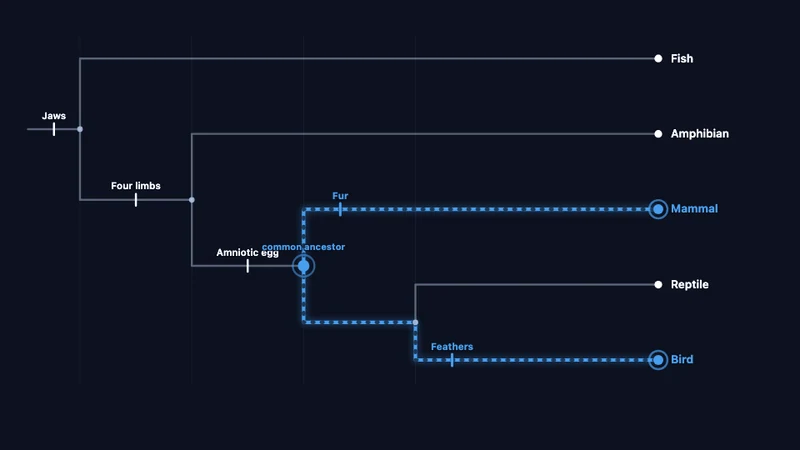
Select two species to identify their most recent common ancestor and shared derived characteristics on a phylogenetic tree.
Biology (Gymnasium)Try it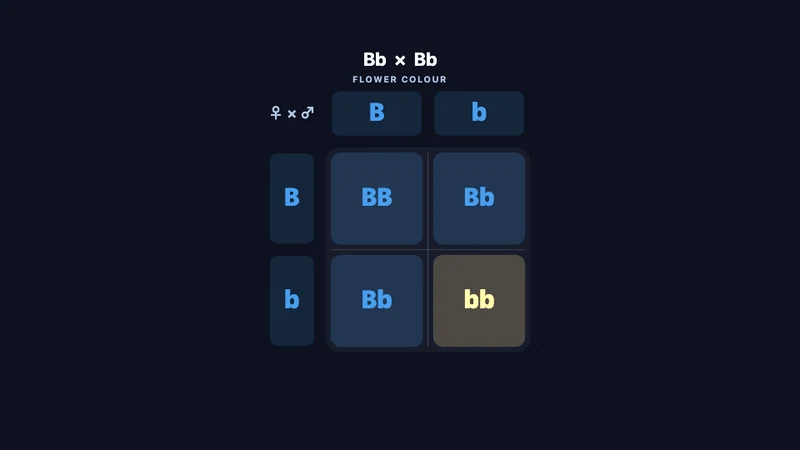
Choose parent genotypes → a Punnett square with offspring genotypes and phenotype ratio (3:1). Dominant/recessive, homo-/heterozygous; mono- and dihybrid (9:3:3:1).
Biology (Gymnasium)Try it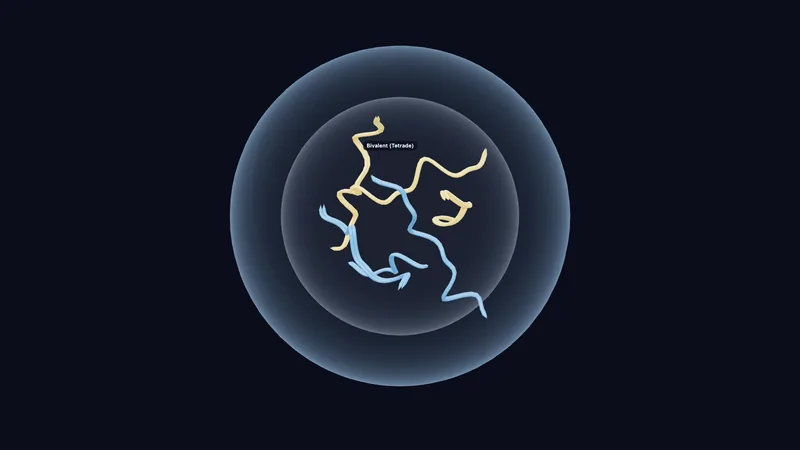
One diploid cell becomes four different gametes: follow in 3D how meiosis I separates homologous chromosomes and meiosis II sister chromatids. With crossing over, a shuffle for random assortment, n/2n and DNA counters, and nondisjunction leading to trisomy 21.
Biology (Gymnasium)Try it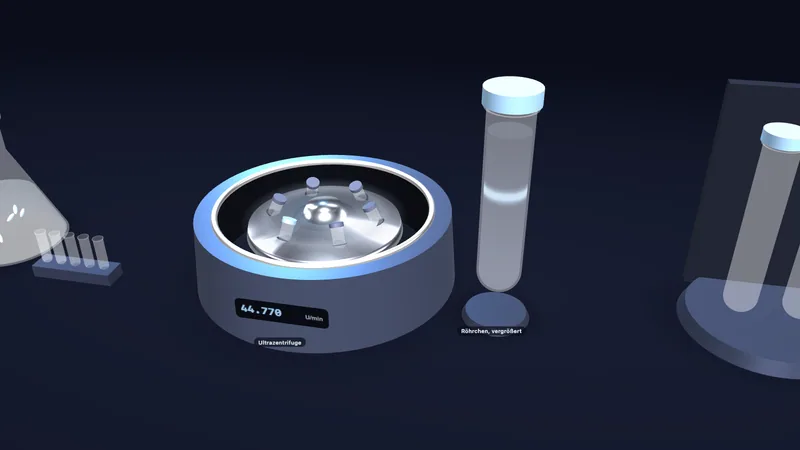
The Meselson–Stahl experiment as a 3D lab story: from the ¹⁵N culture through the ultracentrifuge to the UV image of the bands. Compare the predictions of conservative, semiconservative and dispersive replication with the measurement and find out which generation refutes which hypothesis.
Biology (Gymnasium)Try it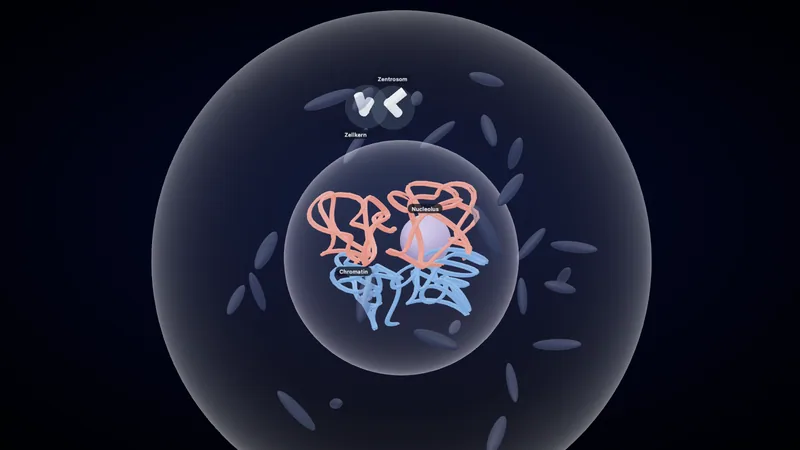
A 3D cell divides: interphase to cytokinesis on a scrubbable timeline, with counters for chromosomes, chromatids and DNA content. It shows why both daughter cells receive the same chromosome set.
Biology (Gymnasium)Try it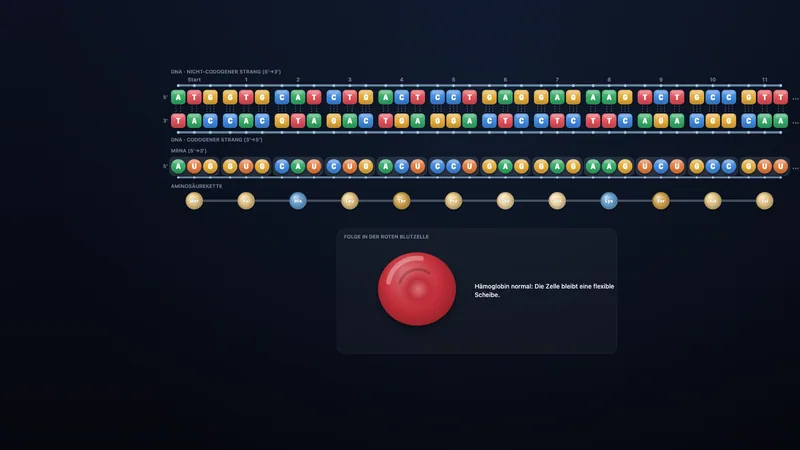
Tap a base in the real β-globin gene and watch the mRNA and amino acid chain rearrange: silent, missense, nonsense or frameshift. Plus the sickle cell, chromosome and genome mutations, and UV damage with repair.
Biology (Gymnasium)Try it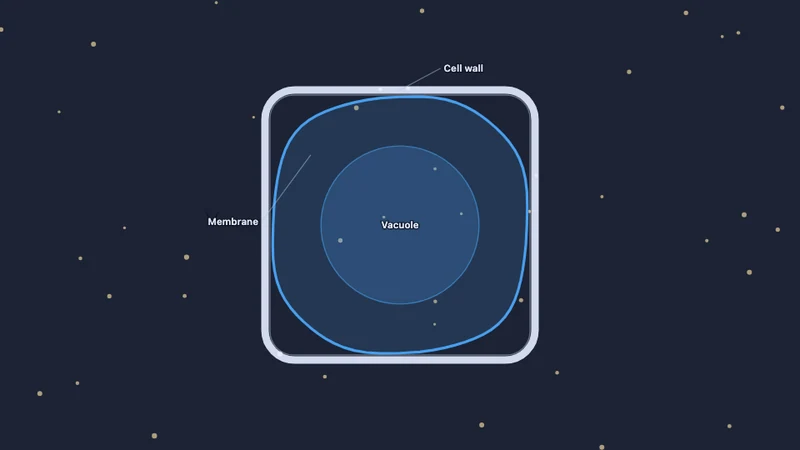
Control the external concentration: in a hypertonic solution the protoplast detaches from the cell wall (plasmolysis), in a hypotonic one water flows in (deplasmolysis). Osmosis across the membrane.
Biology (Gymnasium)Try it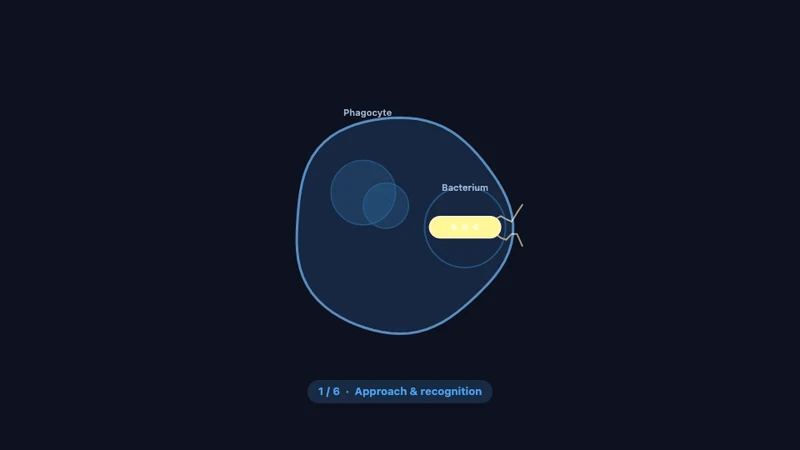
Follow a phagocyte recognising, engulfing and digesting a pathogen through pseudopodia, phagosome formation and fusion with a lysosome.
Biology (Gymnasium)Try it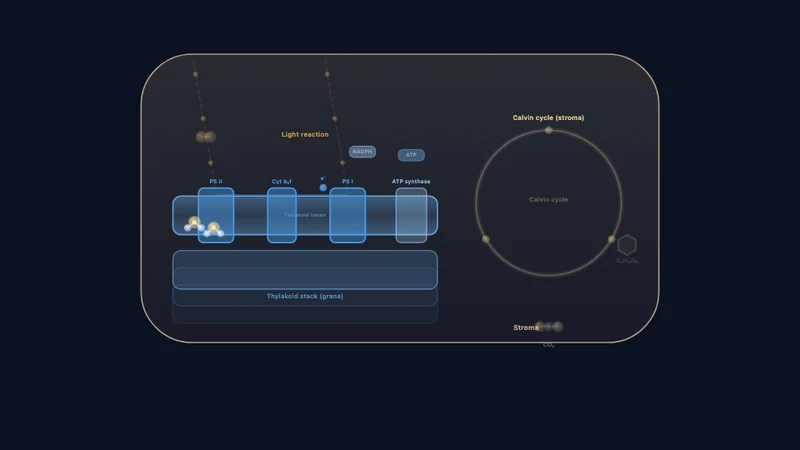
Follow light reactions and the Calvin cycle through six stages. Discover that released oxygen comes from water, and adjust light intensity to change the pace.
Biology (Gymnasium)Try it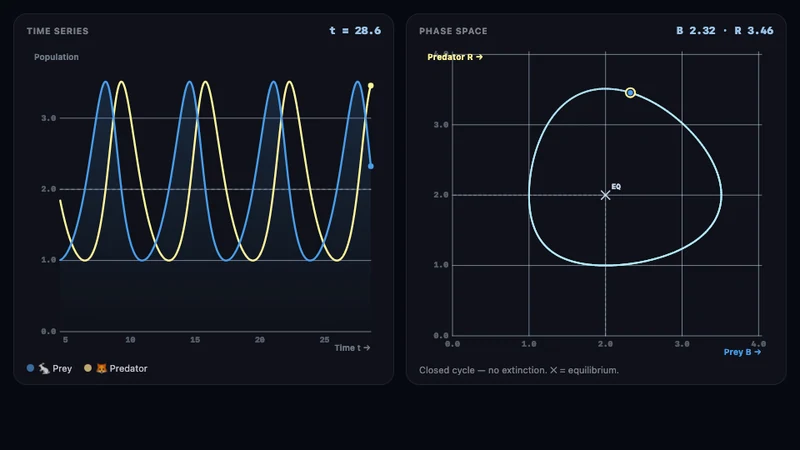
Adjust Lotka–Volterra parameters and compare time series with phase space. Follow predator peaks lagging behind prey peaks in the model’s cycles.
Biology (Gymnasium)Try it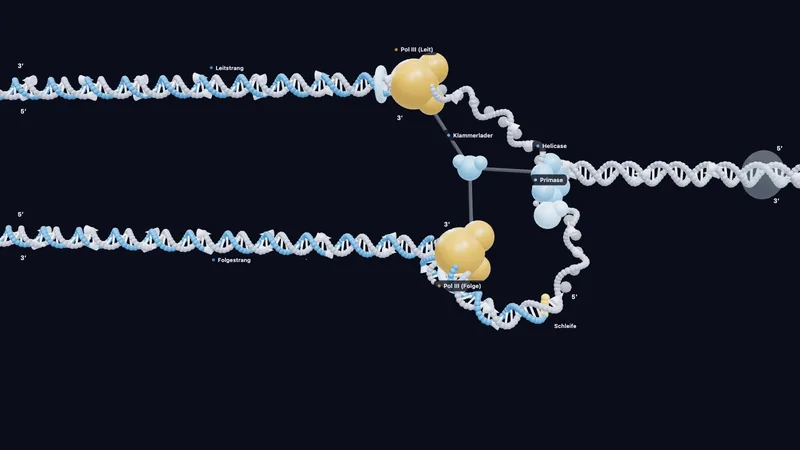
Close-up of a replication fork in 3D: both polymerases work only 5′→3′, so the leading strand grows in one piece and the lagging strand in Okazaki fragments. The trombone model in motion, with primer replacement, a ligase switch and a bacterium/eukaryote comparison.
Biology (Gymnasium)Try it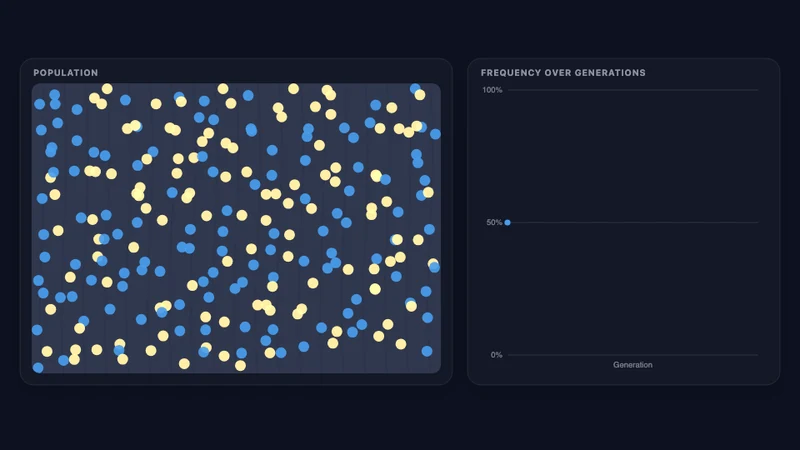
A population with two variants (light/dark peppered moth); selection pressure and background (industrial melanism) shift the frequencies over generations. Variation + selection → adaptation.
Biology (Gymnasium)Try it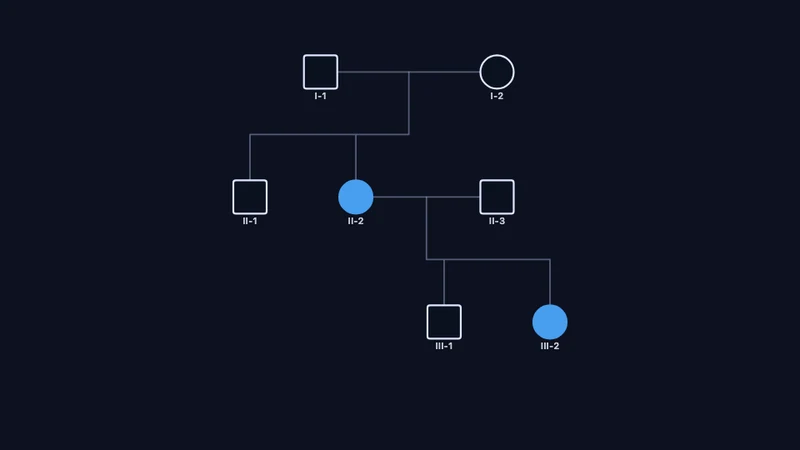
Genetic pedigrees of different inheritance patterns (autosomal/gonosomal, dominant/recessive, e.g. red-green color blindness); determine the inheritance pattern, read off genotypes and carriers.
Biology (Gymnasium)Try it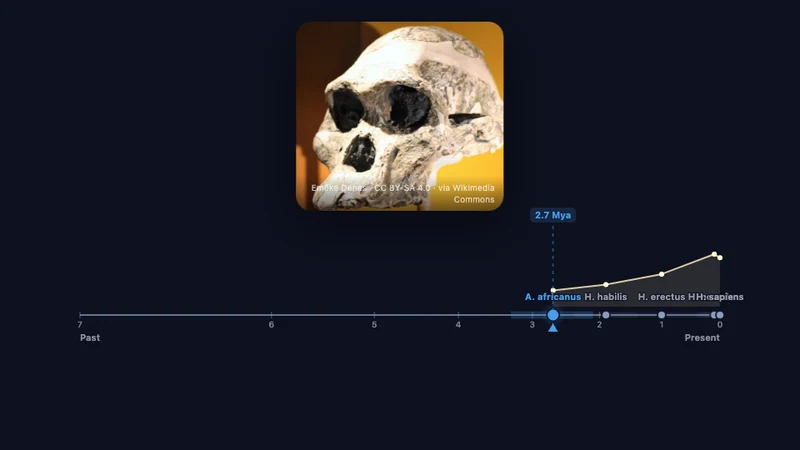
A scrubbable timeline Australopithecus → Homo sapiens: time period, skull shape, brain volume and traits (upright gait, tools) — the trends of human evolution.
Biology (Gymnasium)Try it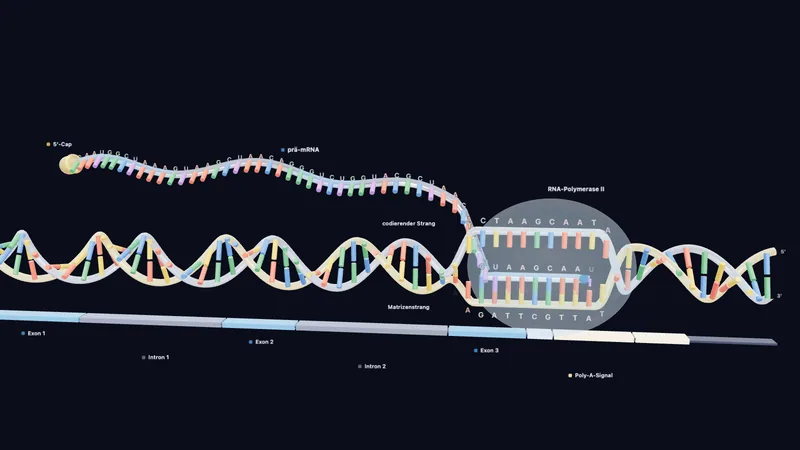
An RNA polymerase reads a gene in 3D: the bubble travels along and the mRNA grows 5′→3′ on the template strand. For eukaryotes with cap, poly-A, splicing (lariat, alternative splicing) and export through the nuclear pore; enter your own DNA sequence.
Biology (Gymnasium)Try it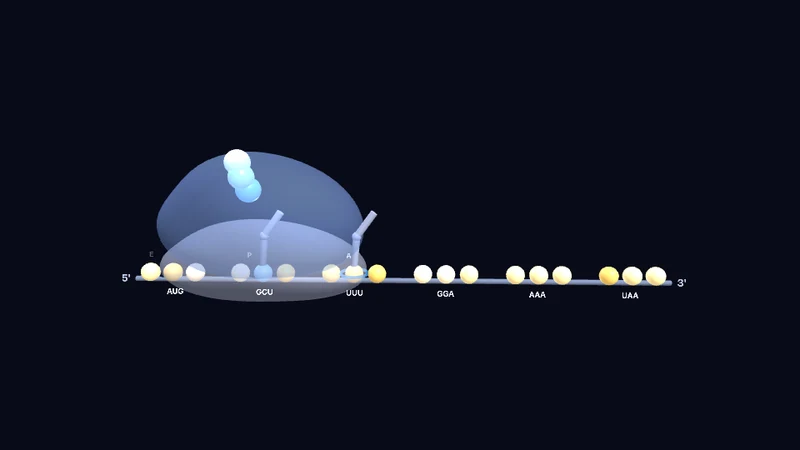
A ribosome reads the mRNA codon by codon: charged tRNAs act as adapters and deliver their amino acid to the A site, the rRNA forms the peptide bond, until a stop codon releases the protein. Change bases or the reading frame and watch the protein change live, up to a polysome.
Biology (Gymnasium)Try itWant to use these apps in your courses? Let’s find out what works for you.
One form, three matters. We answer personally.
We show heyprof on your own material. Tell us what you teach and we will prepare the conversation around it.