Architecture & scenography Learn interactively.
Space as a tool of communication: how walls force paths, what a floor plan makes visible, and where design decides what can be told.
All subjects App catalogue
All apps. Free in your browser.
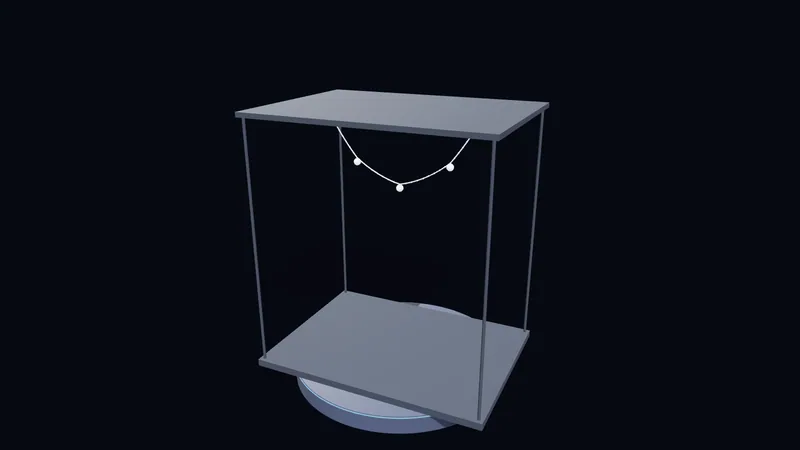
Gaudí's hanging model (3D)
Chains with weight bags find the shape of pure tension by themselves; inverted they become a stone arch in pure compression, while the semicircle next to it cracks at the marked points. Single arch, a row of arches and the chain net of the Colònia Güell. Exhibit-ready.
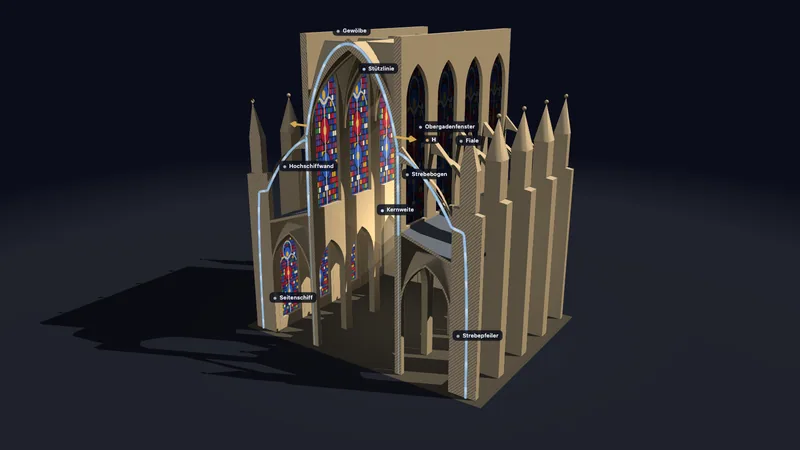
Architecture & scenographyTry itCathedral statics
Section through four bays of a basilica in 3D: a slider moves from the Romanesque with round arches and thick walls to the High Gothic with pointed arches, flying buttresses and pinnacles, while the windows open up and the light inside increases. The thrust line in the section shows whether the thrust stays within the middle third of wall and buttress. Without the flying buttress it leaves the Gothic wall, the wall tips over and the vault collapses.
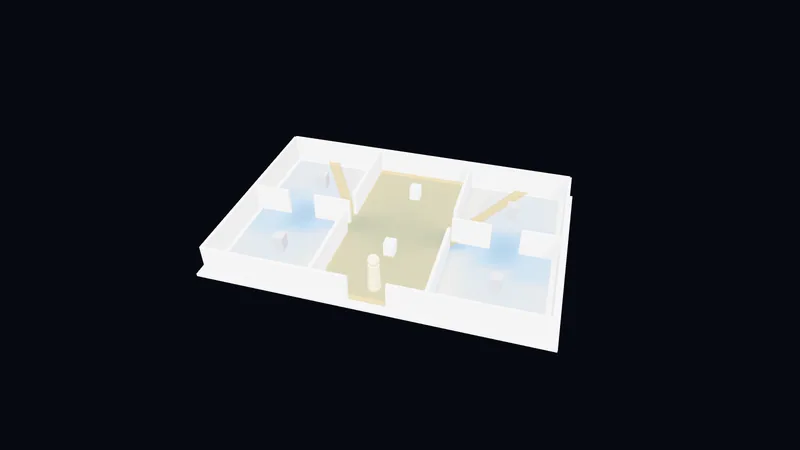
Architecture & scenographyTry itSpace syntax & isovists (3D)
An exhibition floor plan that shows on the floor what can be seen from every place and how well it connects to all others. Drag an observer with its view fan, remove walls and send out agents: they walk where integration is high.
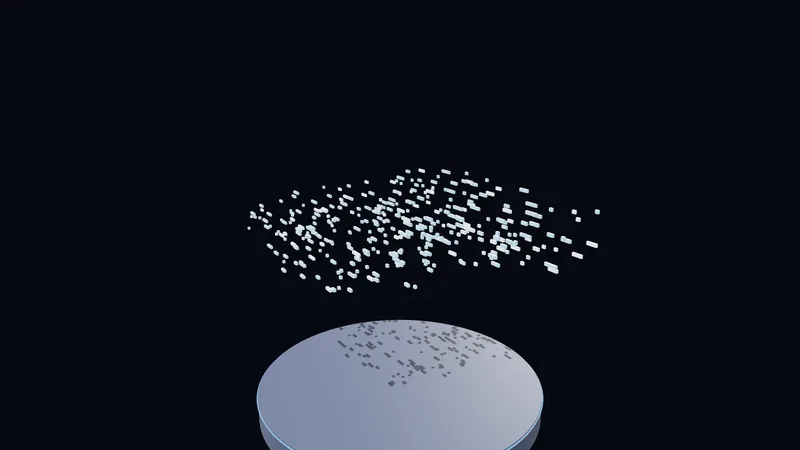
Architecture & scenographyTry itViewpoint — anamorphosis (3D)
Hundreds of floating shards spread in depth join into a motif from one single viewpoint only: WISSEN, RAUM, a cube or an eye. Alignment rises live as you approach the point; sight lines and folding into one image plane show why an image does not reveal depth. Exhibit-ready.
Architecture & scenographyTry itTensegrity — floating struts (3D)
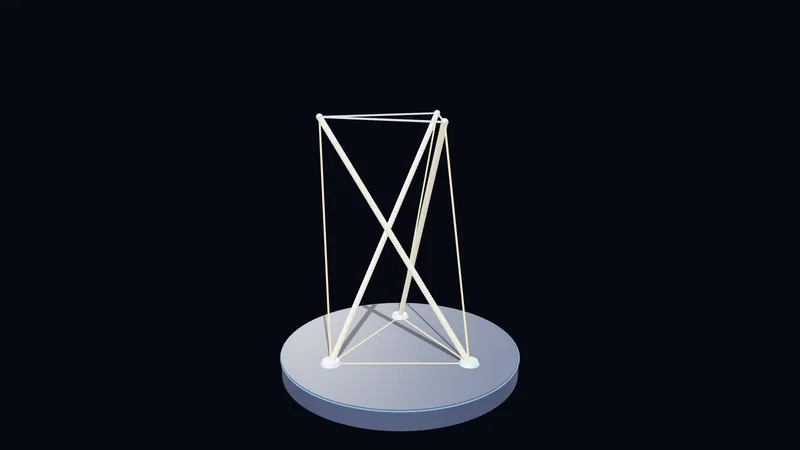
Three tensegrity structures (prism, icosahedron, Snelson's tower), simulated live: the struts never touch, a prestressed cable net holds them. Remove the prestress, add a load or cut a cable, and you see that the stiffness comes from tension. Exhibit-ready.
Architecture & scenographyTry it